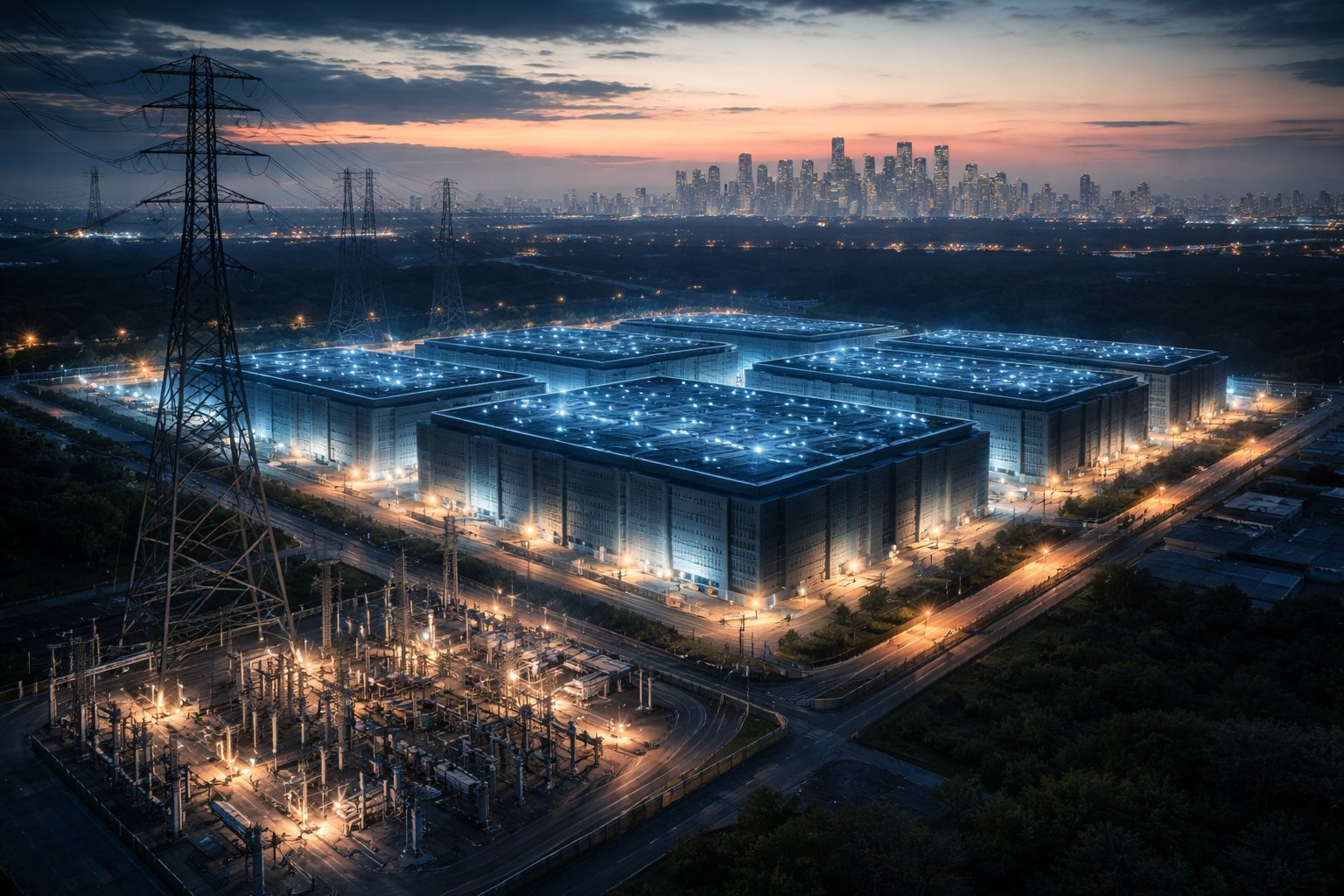
Kenya is positioning itself at the forefront of Africa’s digital transformation with the upcoming $1 billion Microsoft-G42 data centre project, announced during President William Ruto’s Washington visit in May 2024.
Central to this ambition is Kenya’s commitment to expanding its renewable energy capacity, particularly geothermal power, to meet the significant electricity demands of large-scale digital infrastructure.
According to Kenya’s Special Technology Envoy, Ambassador Philip Thigo, claims that the data center construction has been suspended are completely wrong and misleading. On the contrary, recent talks in the government concerning the country’s energy limitations only emphasize the dire need for power production increase.
“Recent report suggesting that Kenya has suspended the Microsoft-G42 data center project, grossly misinterprets H.E. President William Ruto’s remarks,” Amb Philip Thigo, emphasized.
Currently, Kenya’s installed electrical capacity stands at about 3,000 megawatts, with geothermal energy contributing roughly 40% of the mix.
As digital infrastructure projects like the Microsoft-G42 data centre require substantial and reliable power, the government has set an ambitious target to boost capacity to 10,000 megawatts by 2030.
This expansion will primarily leverage Kenya’s abundant renewable energy resources, including geothermal, wind, and solar power.
“We are committed to building a sustainable energy foundation that supports our digital economy’s growth,” Amb Thigo stated. The government plans to mobilize approximately $38 billion through public asset sales and private sector engagement to finance this expansion.
Kenya’s robust policy environment and renewable resource advantages continue to attract major investments in cloud computing and data services. Airtel Africa’s Nxtra data centre in Tatu City is another example of private-sector confidence in Kenya’s tech infrastructure sector.
This integrated approach to developing energy and digital infrastructure underscores Kenya’s vision to become East Africa’s technology hub while championing green energy solutions.
The government’s proactive energy strategy not only secures the future of flagship projects like the Microsoft-G42 data centre but also sets a replicable model for balancing digital innovation with sustainable energy development across Africa.