
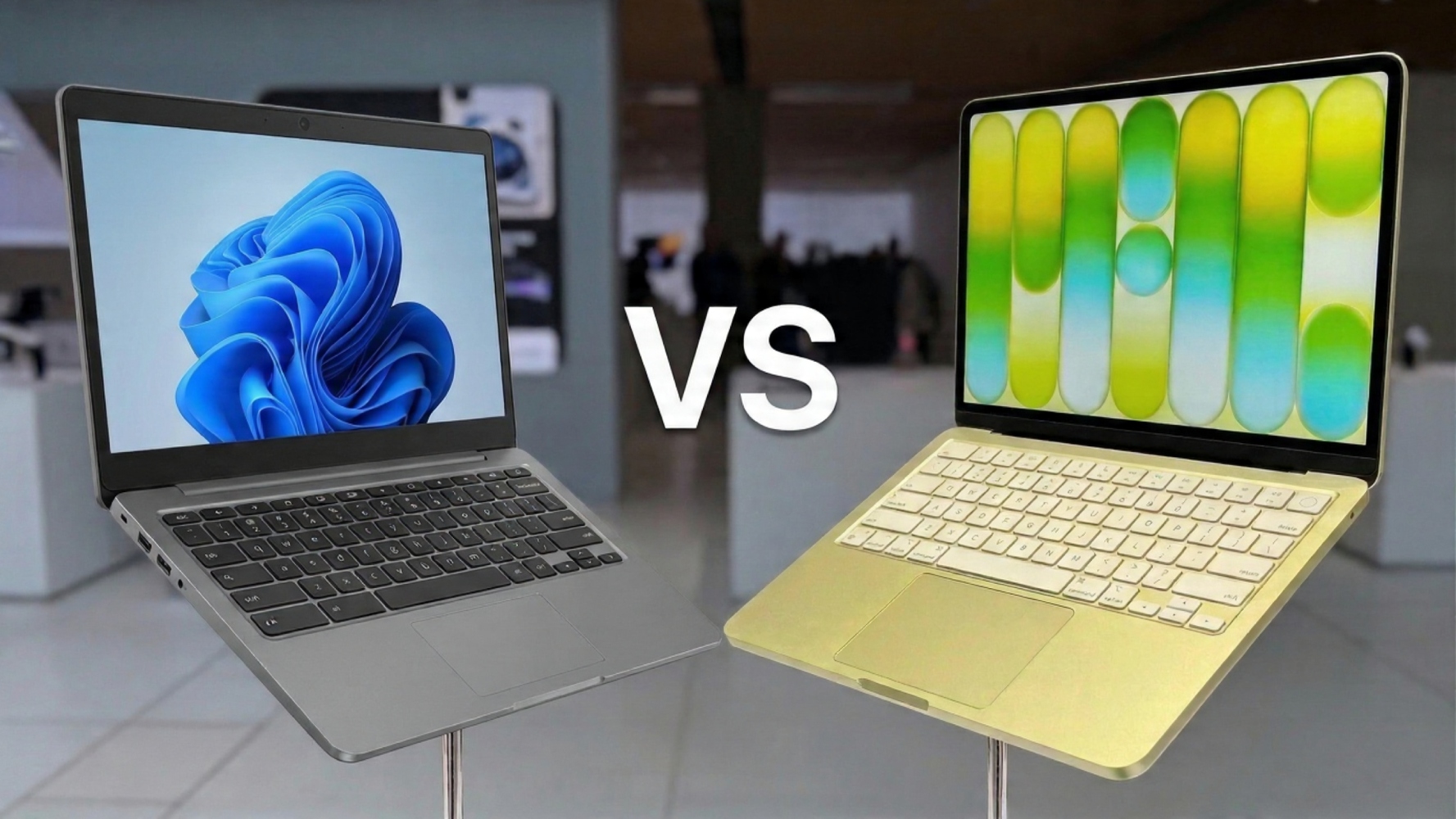
The education market has long been dominated by the Chromebook, but Apple’s release of the $599 MacBook Neo has fundamentally changed the value equation.
For years, schools and parents chose ChromeOS because of the low entry price, often ignoring the limitations of a browser-based operating system.
With the MacBook Neo starting at an even more aggressive $499 for education, the “Apple Tax” has effectively been abolished for the classroom.
The transition from a budget laptop to a full-fledged Mac is no longer a luxury; it is now a practical financial decision for the modern student.
You can explore the specific education pricing and eligibility on the Apple Education Store which lists the Neo as its primary student offering.
The ChromeOS Limitation
Chromebooks are built around the “thin client” philosophy, meaning they rely almost entirely on an internet connection to be useful.
While this works for basic web browsing, it falls apart when students need to perform more intensive tasks like video editing, local coding, or using professional software.
Most Chromebooks in the $300 to $500 range utilize inferior eMMC storage and low-tier processors that struggle to keep up with more than a few open tabs.
In contrast, the MacBook Neo provides a full desktop experience with local storage and the ability to run “pro” apps natively without lag.
MacBook Neo vs Chromebook Features
- Processor Power: The Neo features the A18 Pro chip, outperforming the budget Intel Celeron or MediaTek chips found in Chromebooks by up to 50% in everyday tasks.
- Operating System: MacBook Neo runs macOS Tahoe, allowing for full desktop applications, while Chromebooks are limited to the Chrome browser and basic Android apps.
- Display Quality: The 13-inch Liquid Retina display (2408-by-1506) offers 500 nits of brightness, far exceeding the dim 1080p panels typical of budget Chromebooks.
- AI Productivity: MacBook Neo includes the 16-core Neural Engine for on-device Apple Intelligence, whereas Chromebooks rely on cloud-based AI that requires an internet connection.
- Build & Portability: At just 2.7 pounds with a 100% recycled aluminum enclosure, the Neo offers a premium, durable build compared to the plastic chassis of most Chromebooks.
- Battery Life: The A18 Pro’s efficiency provides up to 16 hours of use, ensuring a student can last from the first class to the final study session without a charger.
- Video Calls: The Neo includes a 1080p FaceTime HD camera and directional mics, a significant upgrade over the standard 720p webcams found on ChromeOS devices.
- Longevity: Macs are built to last 5-7 years with consistent software updates, while budget Chromebooks often become sluggish and obsolete within 2-3 years.
For students already using an iPhone or iPad, the Continuity features of macOS make the MacBook Neo an easy choice.
Features like Universal Clipboard and Handoff allow a student to copy a quote on their phone and paste it directly into an essay on their Mac.
iPhone Mirroring also allows students to interact with their mobile apps on the big screen without having to take their phone out of their pocket.
Ultimately, the MacBook Neo represents a “buy it once” philosophy that Chromebooks simply cannot match.
By choosing the Neo, students are investing in a machine that will likely last them through their entire high school or college career.
The barrier to entry for the world’s most powerful desktop operating system has finally been lowered to a point where it is no longer a question of “if” a student can afford a Mac, but “why” they would buy anything else.
READ ALSO: Apple Released MacBook Neo as Its Cheapest MacBook Ever