
Kenya’s shift from the National Hospital Insurance Fund (NHIF) to the Social Health Authority (SHA) is changing how healthcare facilities manage patients, claims and payments, creating new demands for equipment, diagnostics and digital systems.
The changes come as the SHA continues to expand its coverage across the country. The Ministry of Health reported in June that more than 31 million people had registered with the authority, while 11,034 health facilities had been contracted and more than KSh147 billion paid out in claims since the new system took effect in October 2024.
For hospitals and other healthcare providers, the scale of the new system means that reliable patient records, claims management and service-delivery systems are becoming increasingly important as facilities adjust to SHA requirements.
The changes are also taking place at a time when healthcare providers across East Africa are reviewing their investment needs, from diagnostic equipment and laboratory systems to digital health technologies and hospital infrastructure.
It is against this backdrop that the World Health Expo (WHX) Nairobi is set to take place at the Kenyatta International Convention Centre (KICC) from September 16 to 18, 2026.
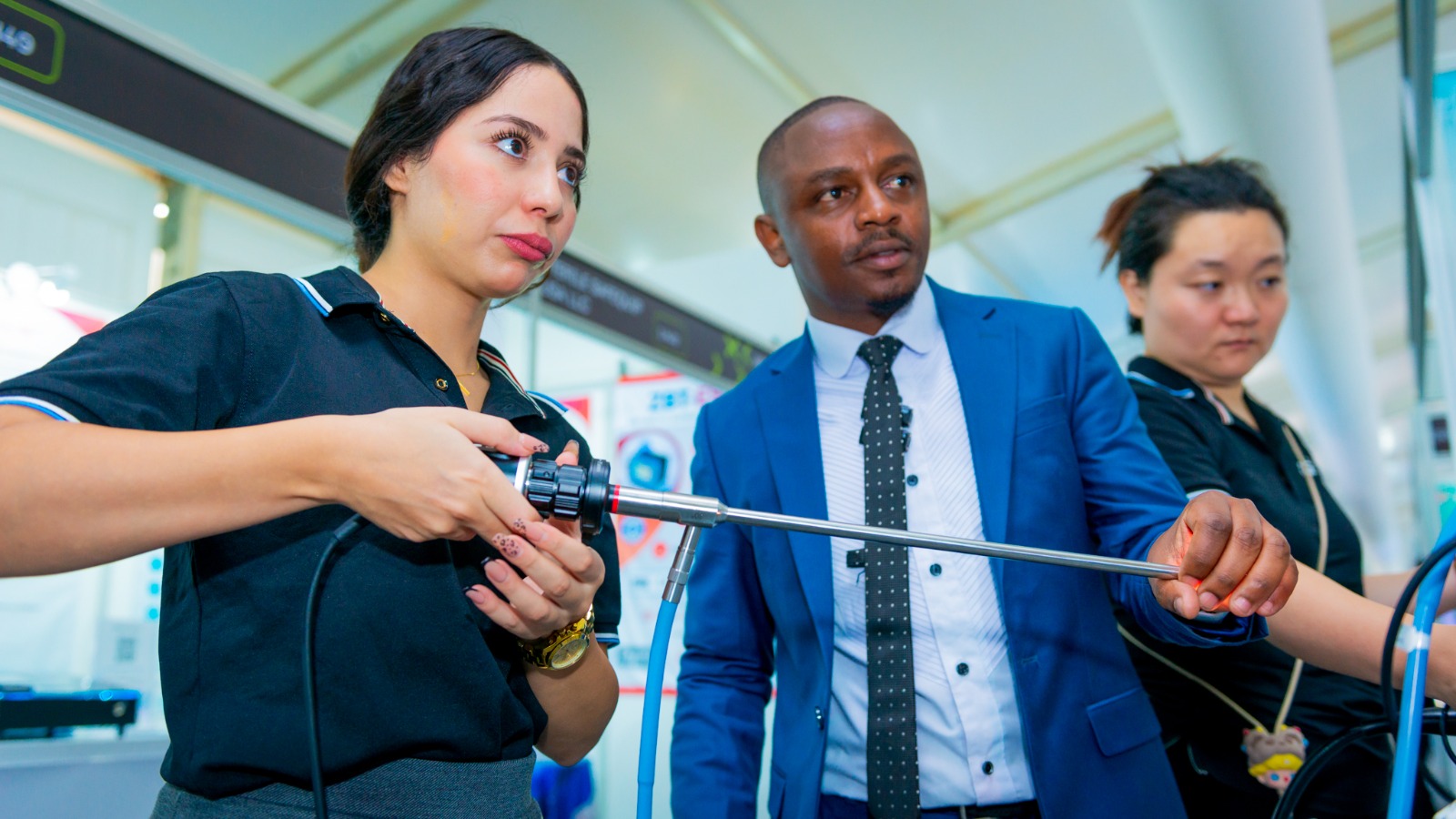
The event, formerly known as Medic East Africa, will bring together healthcare professionals, hospital managers, procurement teams, medical technology companies and suppliers as the region’s healthcare sector responds to changes in financing and service delivery.
WHX Nairobi is expected to attract more than 5,500 attendees and over 200 exhibitors from more than 30 countries. Organisers say the exhibition will cover areas including medical devices, imaging, laboratory diagnostics, digital health and information technology.
For Kenyan hospitals, the procurement question is becoming increasingly tied to how facilities operate under SHA.
The authority’s financing structure covers primary healthcare as well as inpatient, maternity, emergency, chronic and critical care. Facilities therefore need systems that can accurately capture patient information, document services provided and support the submission and processing of claims.
The SHA has also introduced changes to the way some primary healthcare services are reimbursed. Payments are linked to verified patient visits, while the authority has said it is working to reduce the time taken to process claims.
These changes place greater emphasis on accurate data, digital records and efficient revenue-cycle management, particularly for facilities handling large numbers of SHA patients.
The need for investment is not limited to Kenya.
Across East Africa, governments are expanding health insurance and working to strengthen healthcare systems, creating demand for medical equipment, medicines, diagnostics, digital platforms and supply-chain solutions.
In Ethiopia, the expansion of Community Based Health Insurance has increased the number of people accessing services through the scheme, while studies have linked health insurance enrolment with increased revenues for health facilities and greater capacity to invest in services.
Tanzania’s growing pharmaceutical market is also creating opportunities around medicine supply, cold-chain infrastructure, inventory management and related technology. Uganda, meanwhile, continues to face significant needs in hospital infrastructure and health-system investment.
The wider financing challenge remains significant. The World Health Organisation has continued to highlight the pressure on African countries to increase domestic health financing and strengthen the capacity of health systems to deliver essential services.
For private healthcare providers, this creates a market where investment decisions are increasingly influenced by financing arrangements, patient volumes and the ability to deliver services efficiently.
This is where events such as WHX Nairobi become relevant to the business side of healthcare.
Hospitals can use such platforms to compare medical equipment and technology, while suppliers get an opportunity to understand the needs of healthcare providers in Kenya and the wider region.
The areas attracting attention include diagnostic imaging, laboratory equipment, electronic medical records, pharmacy automation, hospital information systems and other technologies aimed at improving efficiency and service delivery.
Dr Janki Chauhan, Chairperson of the Medical Technology Industry Association of Kenya (MEDAK), said the changes brought by SHA were increasing the need for healthcare facilities to review how they operate and invest.
“Healthcare facilities are under immediate pressure to adapt to new reimbursement structures, expanded benefit packages and digitised claims processing,” Chauhan said.
She said the changes in Kenya were part of a wider regional shift, with health financing developments in Ethiopia, Tanzania and Uganda also influencing demand for medical technologies.
Tom Coleman, Portfolio Director for Healthcare at Informa Markets, said the financing reforms were translating into more immediate procurement needs across the region.
“Healthcare financing reforms across East Africa aren’t simply theoretical anymore – they are actively reshaping hospital procurement,” Coleman said.
He said WHX was intended to connect healthcare providers with medical technology companies, distributors and other suppliers as facilities review their investment plans.
WHX Nairobi will be the 10th edition of the healthcare exhibition in Kenya. Organisers say the 2025 edition generated an estimated USD84.19 million in business, although that figure is an event estimate rather than a measure of confirmed contracts or investment across the wider healthcare sector.
The 2026 exhibition will also feature companies and suppliers from outside Kenya, giving local healthcare providers an opportunity to assess equipment and technology options available in the regional and international market.
For Kenya’s healthcare sector, the bigger issue extends beyond a single exhibition.
As SHA continues to reshape how healthcare services are financed and reimbursed, hospitals will have to balance investment in technology and equipment with the realities of operating costs, reimbursement rates and patient demand.
The September WHX gathering provides one opportunity for healthcare providers, procurement teams and suppliers to have those conversations as facilities plan their investments for the coming financial year.
WHX Nairobi will be held at KICC from September 16 to 18, 2026. Registration for healthcare professionals and industry participants is available through the event organiser.