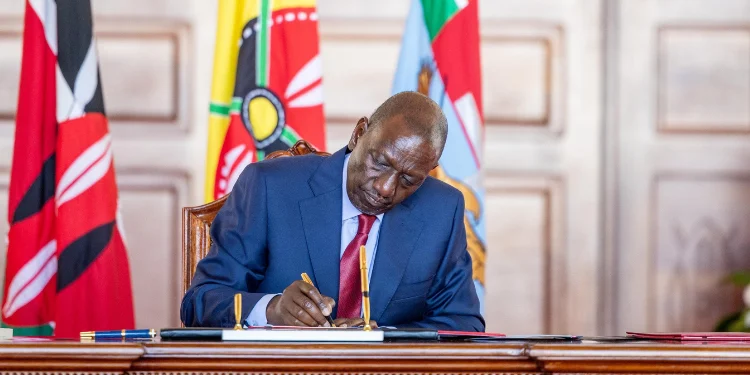
President William Ruto has signed the Finance Bill 2026 into law, paving the way for the implementation of the government’s tax and revenue measures for the 2026/27 financial year.
The President assented to the Bill on Tuesday at State House, Nairobi, bringing to a close the legislative process that began when it was tabled in Parliament earlier this year.
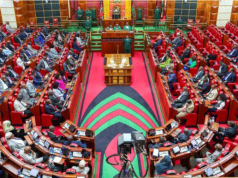
The National Assembly passed the Bill on June 18 during its Third Reading after lawmakers approved the proposed measures.
However, only 162 of the 349 Members of Parliament took part in the final vote, while 186 lawmakers were absent during the session.
Of the 122 MPs who voted in support of the Bill, 103 cast their votes electronically while 19 voted manually. The 40 legislators who opposed it included 36 electronic votes and four manual votes.
The low turnout came as the Finance Bill continued to attract debate among lawmakers, business groups and members of the public over some of its proposed tax measures.
Among the proposals facing opposition is the increase in rental income tax from 7.5 per cent to 10 per cent. Landlords and tenant groups argue that the higher tax could be passed on to tenants, further raising the cost of housing.
Business organisations, including the Consumer Federation of Kenya (COFEK), have also moved to court to challenge the proposal to move the annual tax filing deadline from June 30 to April 30, saying the shorter timeline could affect compliant taxpayers.
Other proposals have also drawn criticism, including taxes on digital and merchant service fees, which critics say could slow the country’s transition to a cashless economy. The proposed tax on imported second-hand clothing, commonly known as mitumba, has also raised concerns over its impact on low-income consumers.
Financial experts, citing KPMG’s analysis of the Bill, have also questioned the proposal to treat undistributed profits as deemed dividends, saying it could discourage business reinvestment. Meanwhile, players in the gaming industry argue that the proposed 20 per cent betting tax could push users to unregulated offshore platforms.
President Ruto signed the Bill into law days before the planned June 25 Gen Z protest anniversary. He has previously warned against acts of violence, destruction of property and attempts to disrupt business during the demonstrations.
Interior Cabinet Secretary Kipchumba Murkomen has also cautioned protesters against breaking the law ahead of the planned June 25 demonstrations. He also criticised Siaya Governor James Orengo and the Linda Mwananchi group, who have indicated they will take part in the protests.