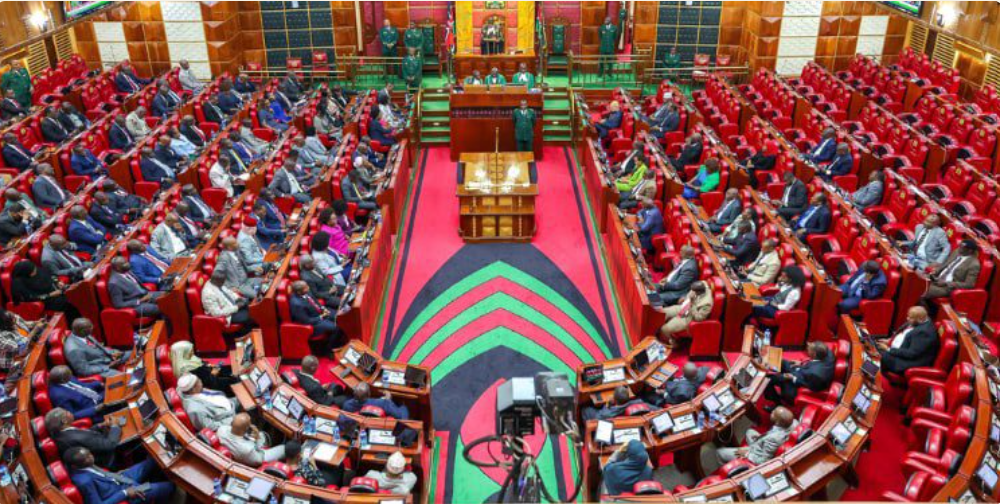
The Finance Bill 2026 has cleared Parliament after Members of the National Assembly voted to pass it on Thursday evening, setting the stage for it to be forwarded to President William Ruto for assent.
The Bill sailed through the Third Reading after a lengthy and at times heated debate in the House, with 122 MPs voting in support of it and 40 voting against. No member abstained.
Its passage marks the final stage of parliamentary consideration and concludes weeks of debate over the government’s proposed tax and revenue measures for the 2026/27 financial year.
The vote was conducted electronically after an earlier attempt to pass the Bill by acclamation sparked objections from some lawmakers, who demanded a formal vote.
National Assembly Speaker Moses Wetang’ula subsequently directed that members cast their votes electronically in line with parliamentary procedures.
“The Speaker will decide whether you will have electronic voting. Where we will have difficulty, we will have assisted voters,” Wetang’ula ruled.
Before the final vote, MPs spent several hours debating the proposed law and considering amendments, some of which were introduced after concerns raised by members of the public during the public participation process.
A number of proposals that had attracted criticism were either revised or dropped, while lawmakers also moved to retain tax reliefs on some essential goods.
The Bill proposes changes to several tax laws, including the Income Tax Act, Value Added Tax Act, Excise Duty Act, Tax Procedures Act, Miscellaneous Fees and Levies Act, and the Stamp Duty Act.
According to the government, the changes are aimed at improving tax compliance, widening the tax base and raising revenue to finance programmes outlined in the 2026/27 budget.
Even so, the debate exposed sharp divisions in the House.
Several opposition lawmakers argued that some of the proposed measures could increase pressure on households and businesses already grappling with a high cost of living.
Earlier in the day, Rigathi Gachagua, who leads the Democracy for Citizens Party, had directed MPs allied to his party to reject the Bill.
On the other hand, government-allied legislators rallied behind the proposals, insisting they were necessary to boost revenue collection and fund development projects.
National Assembly Majority Leader Kimani Ichung’wah was among those who defended the Bill, saying the measures contained in it would help support the government’s development agenda.
With Parliament’s approval now secured, attention shifts to State House, where President Ruto is expected to decide whether to sign the Bill into law and usher in the new tax measures proposed for the coming financial year.