KCB Group has posted a pre-tax profit of KShs 24.4 billion for the first quarter ended March 31, 2026, representing a 15.3 per cent growth compared to KShs 21.2 billion recorded in the same period last year.
The Group says the performance reflects sustained momentum across subsidiaries, strong balance sheet management, and diversified revenue streams, despite a challenging operating environment.
Total operating income rose by 8.5 per cent to KShs 53.6 billion, largely supported by growth in interest-bearing assets, which helped offset a decline in net interest margins. The Group noted that sustained rate cuts across the region led to lower asset yields in all its markets during the period under review.
KCB’s balance sheet expanded to KShs 2.3 trillion, representing a 10.8 per cent increase, driven by higher customer activity across key business segments. Customer deposits also rose by 15.7 per cent.
Excluding the impact of NBK which the Group divested from in May 2025, year on year growth pre-tax profit and operating income stood at 17% and 16% respectively.
Subsidiaries excluding KCB Bank Kenya maintained strong performance, with their profit before tax making up 29.5%of the overall Group earnings and 31.5% of the Group balance sheet. The three non-banking subsidiaries sustained their PBT contribution KCB Bancassurance Intermediary (KShs. 209M), KCB Investment Bank (KShs. 274M) and KCB Asset Management (KShs. 64M).
Total operating costs grew by 7.3 per cent to KShs 24.3 billion, attributed to higher workforce expenses, increased technology investments, and business expansion costs.
Non-funded income increased by 8.3 per cent to KShs 17 billion, supported by growth in digital lending and foreign exchange income as the Group continued to support trade, investment, and working capital needs across its markets.
On asset quality, the Group recorded improvements across subsidiaries, with the non-performing loan (NPL) ratio reducing to 16.6 per cent from 19.3 per cent. This was supported by recovery efforts and a 9.1 per cent growth in the gross loan book.
The stock of NPLs reduced to KShs 217.8 billion from KShs 233.3 billion. The Group, however, maintained prudence in provisioning, setting aside KShs 4.9 billion against potential loan losses.
Customer deposits grew by 16 per cent to KShs 1.7 trillion, driven by continued onboarding of new-to-bank customers across both corporate and retail segments. The gross loan book stood at KShs 1.32 trillion, up from KShs 1.21 trillion.
The Group posted a return on equity of 21.5 per cent. Total equity attributable to shareholders grew by 18.5 per cent to KShs 352.2 billion, while earnings per share rose to KShs 22.18 from KShs 20.03 in the same period last year.
KCB maintained strong capital buffers, remaining above regulatory requirements. Core capital stood at 18.2 per cent of risk-weighted assets, while total capital adequacy stood at 21.6 per cent. The Group’s liquidity ratio remained strong at 51.1 per cent.
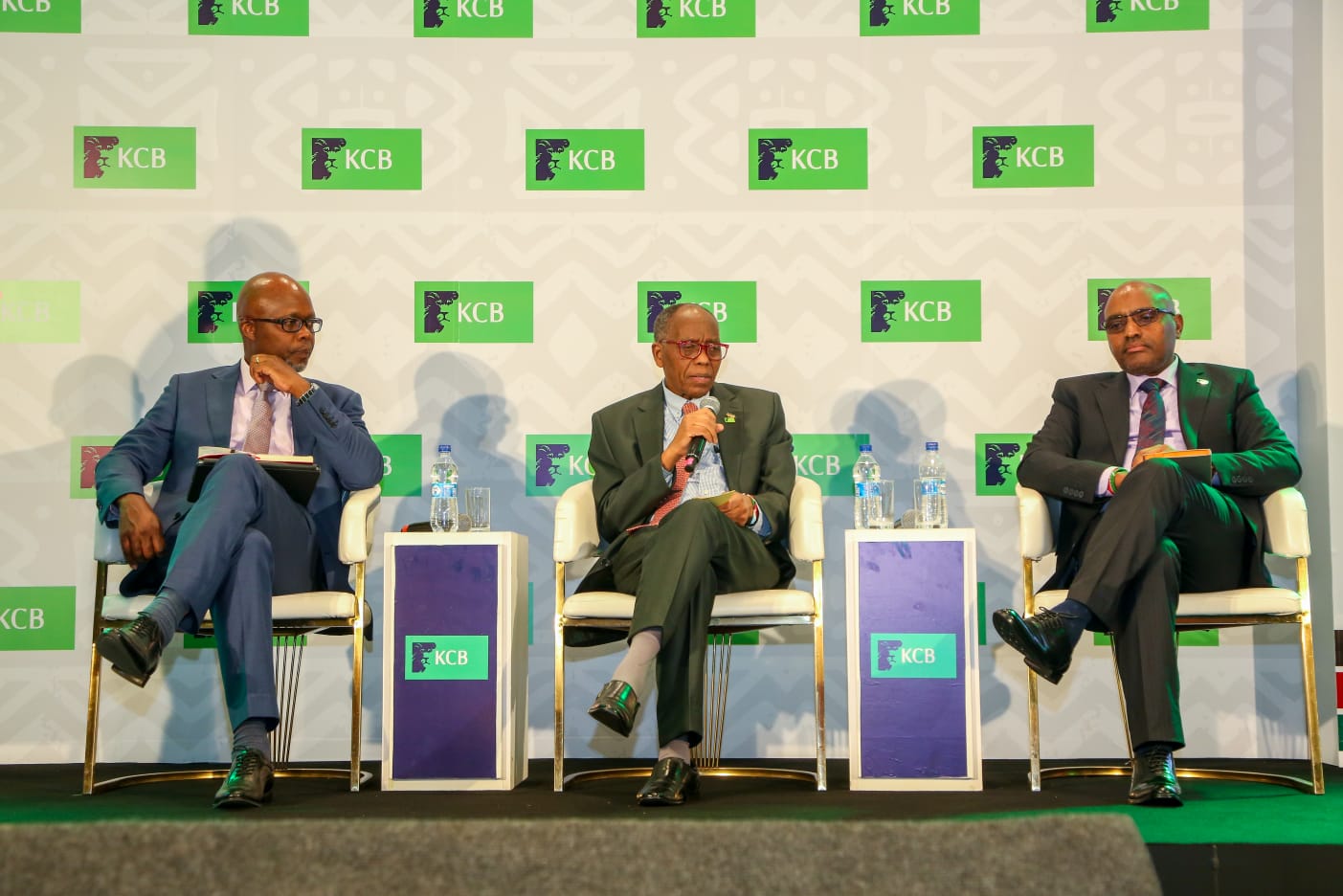
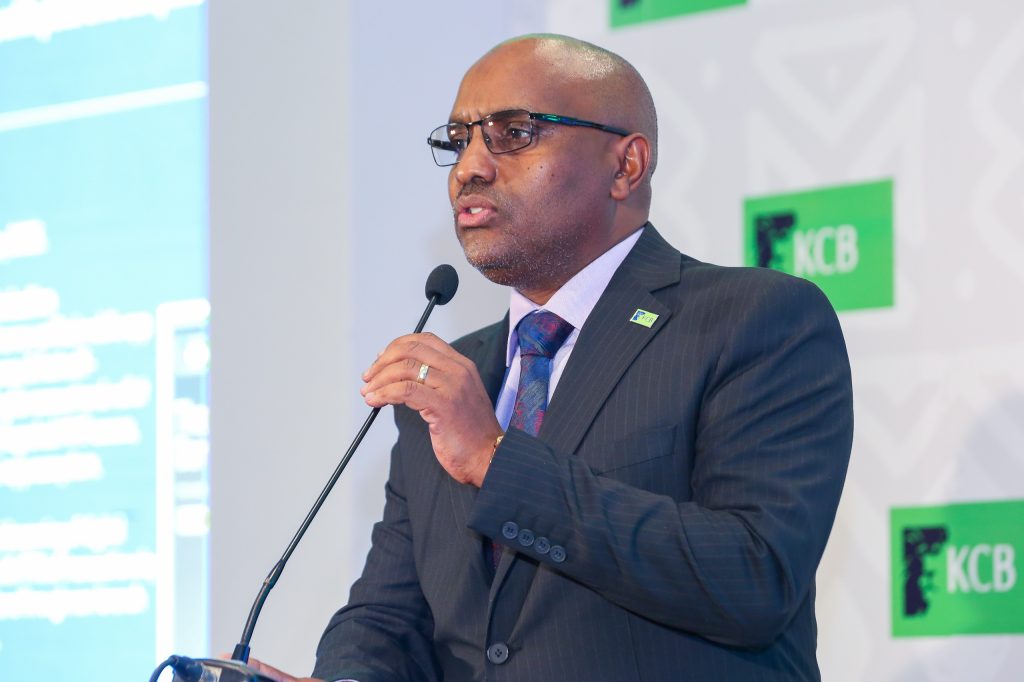
Group Chief Executive Officer Paul Russo said the results were driven by disciplined execution, continued investment in digital innovation, and the Group’s commitment to financing economic transformation across the region.
“Despite the challenging operating environment, we delivered solid growth driven by disciplined execution, continued investment in digital innovation, and our unwavering commitment to providing financing that catalyzes economic transformation across the region,” said KCB Group CEO, Paul
Group Chairman Joseph Kinyua said the performance reflects the strength of the Group’s long-term strategy and its ability to navigate evolving market conditions.
“The Group’s strong start to the year is a clear affirmation of the effectiveness of our long-term strategy, the resilience of our regional businesses, and the discipline with which we continue to execute our priorities. The Middle East conflict presents a significant counterforce to global growth through its impact on commodity markets, inflation expectations and financial conditions,” said KCB Group Chairman, Dr. Joseph Kinyua.
During the quarter, the Group signed a partnership between KCB Foundation and UNHCR aimed at advancing financial inclusion and livelihoods for refugees and host communities.
KCB Bank Kenya also secured a $96.9 million (KShs 12.5 billion) financing from the Green Climate Fund, alongside co-financing from the Bank, to support green projects for MSMEs and farmers.
The Group sponsored the 2026 WRC Safari Rally with KShs 227 million and ran a nationwide consumer promotion, where the grand winner received a one-bedroom apartment at Tatu City courtesy of Unity Homes.
In April, KCB signed an agreement with the Ministry of Education to support sustainable learning institutions through concessional financing for clean energy solutions in schools.
The Group also introduced a KShs 20 flat fee on Pesalink transfers above KShs 1,000, aimed at making real-time digital payments more affordable for individuals and MSMEs using its digital banking platforms.
KCB Group said it remains focused on sustaining performance while navigating global economic pressures, including geopolitical tensions and their potential impact on trade, inflation, and credit demand.
READ ALSO: KCB MSME Loans Boost as Bank Ranks Among Top Lenders in Q1 2026