By John Toris
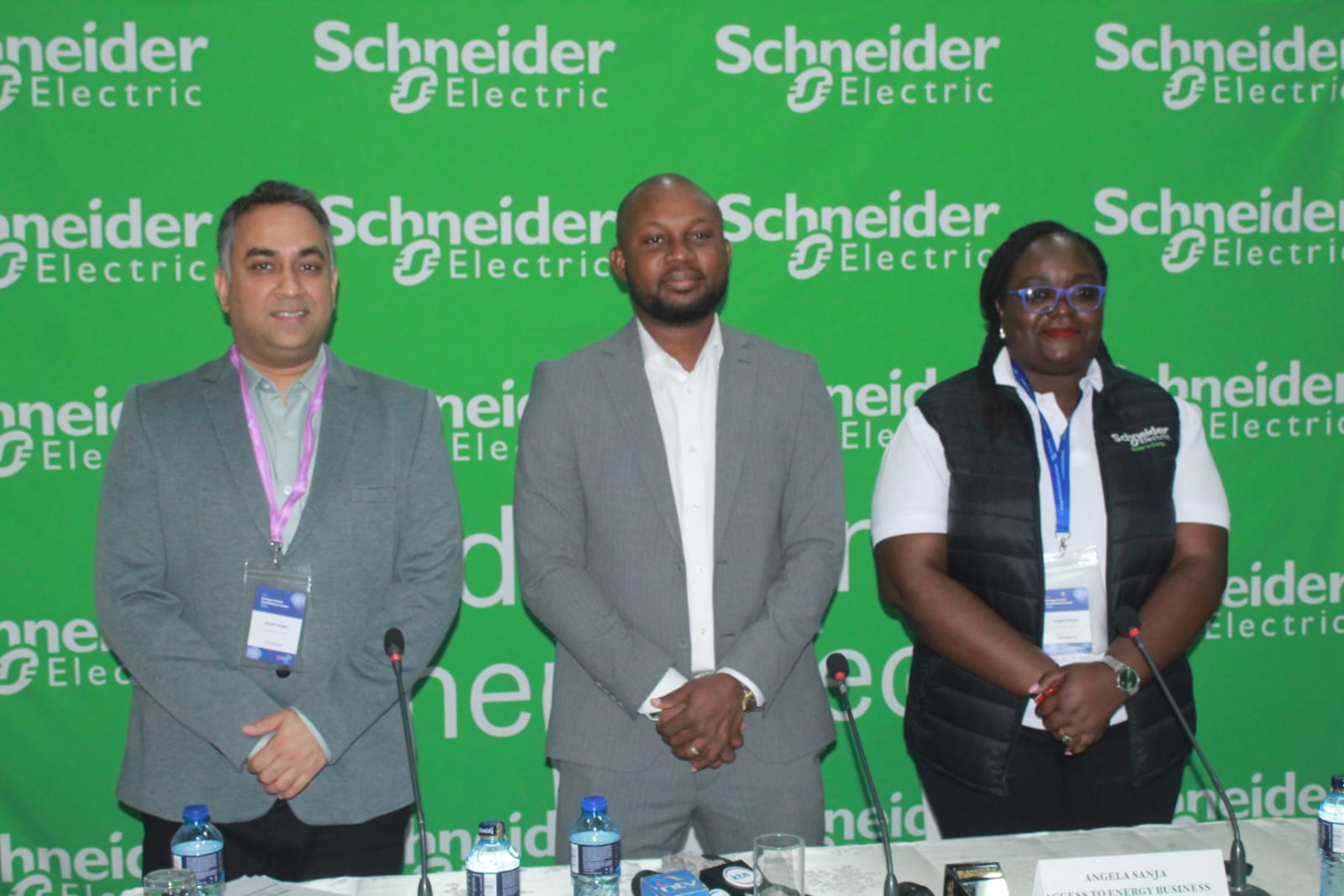
As the Alliance for Rural Electrification (ARE) Energy Access Investment Forum (EAIF) 2026 kicked off today, Schneider Electric reinforced its commitment to driving an inclusive energy transition by expanding affordable, reliable, and sustainable green electricity across Sub-Saharan Africa.
The global energy technology leader used the four-day conference to showcase decentralized clean energy solutions and introduce its Climate Smart Village model a technology-driven, community-centred approach designed to deliver tangible social and economic impact at the local level.
According to the International Energy Agency’s Tracking SDG 7: The Energy Progress Report 2025, more than 666 million people worldwide still lack access to electricity, with Sub-Saharan Africa bearing the largest share of the gap.
Of the 20 countries with the widest electricity access deficits in 2023, 18 are in the region. Against this backdrop, Schneider Electric called for global collaboration to achieve “energy democracy” and strengthen inclusive energy governance as a pathway to overcoming the trilemma of access, affordability, and reliability.
“Access to energy must go hand in hand with strengthening human capacity and fostering local entrepreneurship,” said Ayush Gupta, Director of Global Strategy & Business for Anglophone Africa, Access to Energy at Schneider Electric. “Since 2009, we have integrated clean electricity access with vocational training, support for local entrepreneurs, and impact investing, ensuring that communities gain not only reliable energy, but also economic opportunities and long-term self-reliance to power progress.”
The company highlighted its Homaya Advanced Solar Solution, which delivers clean electricity to last-mile communities including healthcare facilities, schools, and micro-entrepreneurs, enabled by digital monitoring via EcoStruxure Energy Access.
Another key innovation, the Altivar Solar ATV320 a solar-powered water pumping solution helps expand access to clean water and sustainable irrigation in off-grid regions, boosting agricultural productivity, food security, and public health outcomes.
Schneider Electric also presented its Climate Smart Village model, already successful in India. In the villages of Sehal and Chatti in Jharkhand, an integrated 85 kW solar system powers lighting, irrigation, agricultural processing, public services, and local businesses.
The outcome of all of this has been a doubling of incomes in four years, decreased seasonal migration, increased women’s participation in income generation activities, and annual reduction of about 60,000 kg of CO2 emissions.
“Providing access to clean energy can have a transformational impact on the development of societies because it brings economic empowerment, as well as improved resilience and adaptation to climatic challenges,” Ifeanyi Odoh, Country President of Schneider Electric East Africa, stated.
“The potential of energy for change can be realized through locally tailored and technologically robust solutions that help communities across Sub-Saharan Africa to create a sustainable future.”
Unlike many corporate pledges, Schneider Electric has already reached impressive results through its initiatives – more than one million people received support, 11,000 entrepreneurs were developed in 60 countries around the globe, and 61.7 million individuals gained access to clean energy as Schneider Electric aims at improving the lives of 100 million people by 2030.
Schneider Electric is a multinational company that develops technologies which lead to increased energy efficiency and sustainability by electrifying, digitalizing and automating industries, businesses, and households. Its products allow buildings, data centers, factories, infrastructure, and grids to function as open and interconnected eco-systems.
The portfolio features smart devices, software-driven platforms, artificial intelligence enabled solutions, digital services, and expert advice. Schneider Electric, with its 160,000 staff members and one million partners in over 100 countries, is regularly featured in the global sustainability rankings.