
By Njeri Irungu
African countries have been urged to play a bigger role in shaping global decisions on governance, digital policy and financial cooperation.
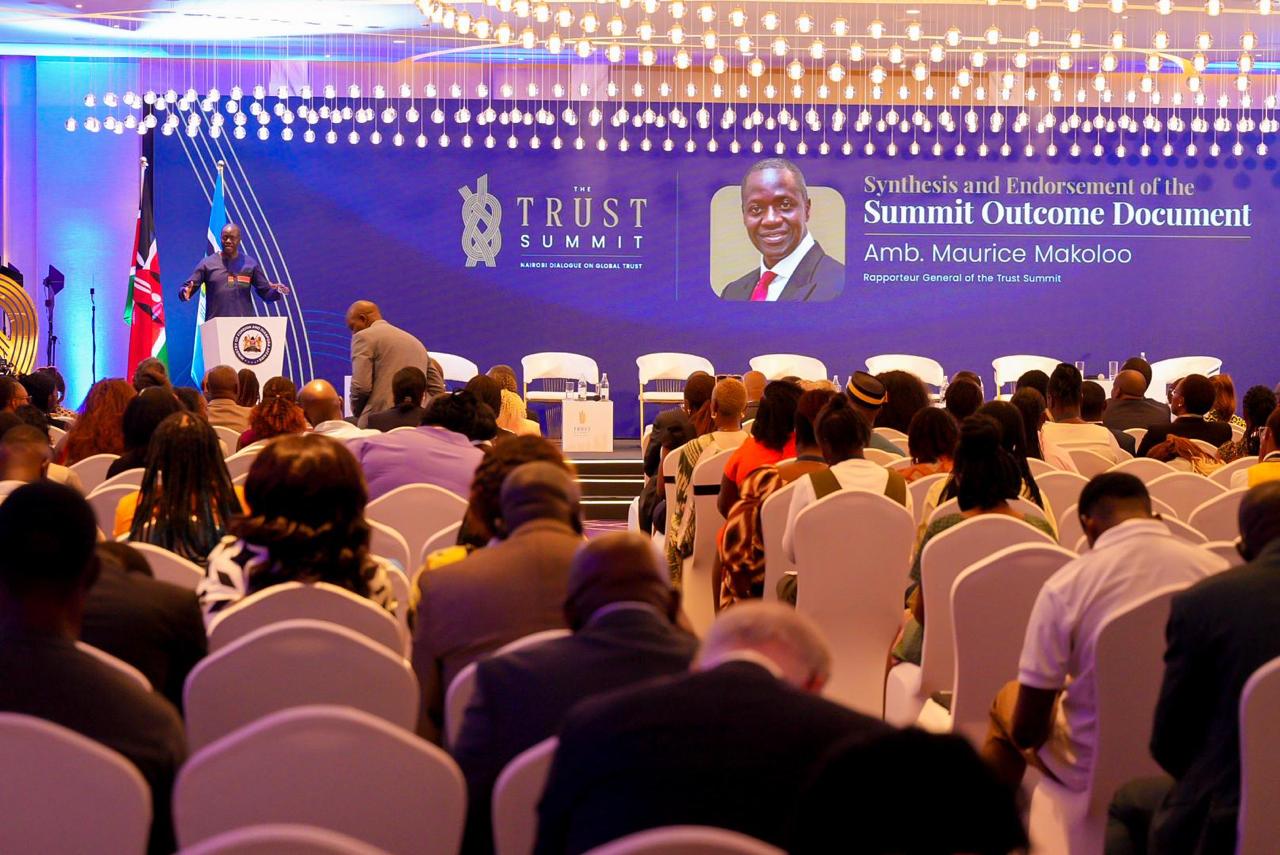
The call was made at the inaugural Nairobi Trust Summit, which ended with the adoption of the Nairobi Call to Action on Global Trust on October 23.
The agreement contains 29 proposals aimed at rebuilding trust in public institutions and giving African countries and other underrepresented communities a stronger voice in decisions that affect their future.
The three-day summit, held from October 21 to 23 under the theme “Weaving Trust: Binding Strands for a Stronger Global Order,” brought together representatives from governments, businesses, civil society, academia, international organisations, technology and the media.
One of the key issues raised was the need to reform multilateral institutions and the global financial system to make them more representative, transparent and accountable to the countries and communities they serve.
Participants proposed a review conference on the United Nations Charter under Article 109. They also called for reforms in global health governance and better coordination among regional and continental organisations involved in preventing and resolving conflicts.
The agreement further calls for climate commitments to be backed by predictable financing, technology transfer and capacity building, particularly for countries facing greater climate risks.
Africa seeks greater role in digital governance
Digital governance was another major area of focus at the summit.
Participants called for stronger international cooperation on artificial intelligence, greater transparency in the operations of digital platforms and safeguards against the harmful effects of synthetic content on public discourse.
The agreement also highlighted the need to protect independent journalism and scientific integrity, noting their role in providing reliable information and helping the public understand decisions made by governments and other institutions.
Youth participation in development
Young people also featured prominently in the agreement.
Participants said youth should not be viewed only as recipients of government programmes but as active contributors to economic development, institutional reform and international cooperation.
The framework notes that approximately 70 per cent of sub-Saharan Africa’s population is under the age of 30, making youth participation important in shaping policies that affect the continent’s future.
The agreement also calls for greater access to employment, entrepreneurship and financial opportunities for young people.
Sport, culture and the creative economy were identified as other areas that could help strengthen social cohesion and bring communities together.
New trust bodies proposed
The summit proposed a Coalition on Global Trust to give governments and non-state actors a platform to share knowledge and coordinate action across borders.
A separate Nairobi Trust Council, which will be hosted by Kenya, is expected to bring together leaders from the public, private and philanthropic sectors to review progress and promote accountability.
Principal Secretary for Foreign Affairs Korir Sing’Oei said the next phase would focus on developing an implementation plan and expanding public engagement to counties.
This will allow institutions and regulators to explain their decisions and demonstrate how they protect the public interest.
Trust Summit Chief Executive Officer Awel Uwihanganye said rebuilding confidence would require collective responsibility across countries and sectors.
The summit’s proposals will now move into implementation, with a framework for monitoring progress and reporting on commitments to be developed.
The meeting is expected to be held every two years, while organisers consider expanding the Trust Dialogues to regional and international platforms.