Kenya’s economy is under pressure as public debt rises and essential services decline.
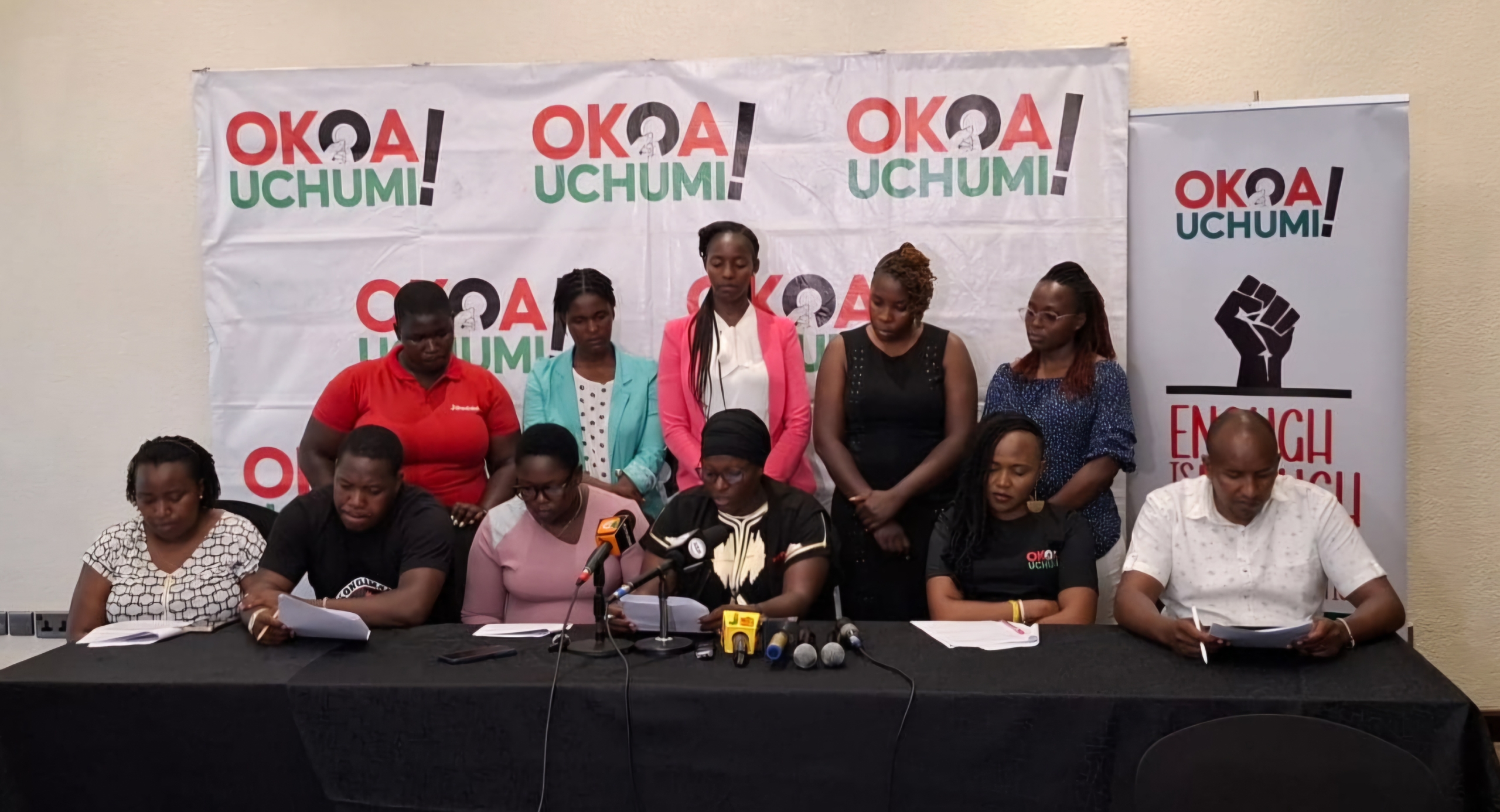
Civil society organizations under the Okoa Uchumi Campaign have raised concerns over financial mismanagement and excessive government spending, calling for urgent reforms.
A recent report by the Auditor General, released on March 4, 2025, exposed massive wastage in public funds.
The report flagged serious issues in the Social Health Insurance (SHI) and Social Health Authority (SHA) programs, mismanagement of the Hustler Fund, and irregular compensation through court awards.
The coalition of activists and economists blamed the government’s excessive spending, not low revenue collection, for the country’s financial woes.
They also criticized the 2025 Budget Policy Statement (BPS) and the Medium-Term Debt Strategy (MTDS), pointing out inconsistencies in financial data, including a Ksh. 73 billion variance in expenditure figures.
Annet Nerima, Program Manager at the Kenya Human Rights Commission, warned that Kenya’s national debt-to-GDP ratio is projected to exceed safe levels, reaching 63.6% against the 55% target.
She also highlighted that 82.3% of new borrowing would come from domestic sources, which could harm private sector growth.
“This situation encourages banks to invest in government securities instead of lending to businesses that create jobs,” Nerima noted.
She also questioned why interest rates remain high despite heavy government borrowing, warning that this might be fueling corruption.
The coalition also slammed the government’s revenue projections of Ksh. 2.83 trillion, calling them unrealistic.
They warned that if these targets are not met, the government will either introduce more taxes or borrow more, worsening the debt crisis.
“Punda Amechoka“—The Tax Burden Is Too Heavy
Activists warned that additional taxes would hurt businesses and households. Employers and employees alike fear that higher taxes will cripple investments and reduce disposable income.
Mark Amani of Kongamano La Mapinduzi urged Parliament to demand full disclosure of funds allocated to SHA, NHIF, and the Hustler Fund.
He also called for the cancellation of all SHA/SHI contracts due to procurement irregularities.
The coalition condemned the Public Audit Amendment Bill 2024, describing it as a move to weaken the Office of the Auditor General (OAG) and limit its independence.
Wanja Maina, Lead at Hummingbird Grassroots Center, highlighted that 67.5% of Kenya’s 2025/26 budget will go toward servicing debt instead of funding development projects.
She urged the government to prioritize debt management and make credit more affordable for businesses.
Call for Transparency and Public Participation
The Okoa Uchumi Campaign stressed the need for transparency in the budget-making process.
They called on Parliament to investigate discrepancies in Kenya’s fiscal reports and push for a forensic audit of public debt.
“The government must take urgent action to secure Kenya’s economic future through prudent financial management,” the coalition said.
They also urged Kenyans to stay engaged in the budget process to hold leaders accountable.
With four in ten Kenyans living in poverty, they warned that without urgent reforms, more citizens could slip into destitution.
Key Recommendations:
- Reduce unnecessary government spending instead of increasing taxes
- Ensure transparency in financial reports and budget allocation.
- Support agriculture and small businesses to boost economic resilience.
- Make public debt data accurate and accessible.
- Strengthen the Auditor General’sindependence.
Kenya’s financial future depends on bold reforms and responsible leadership.
The coalition is calling on Parliament, the Treasury, and citizens to demand better governance and protect the economy from further decline.