Global stock markets fell on Monday while oil prices surged past $100 a barrel, as growing tensions in the Middle East raised fears of disruption to shipments through the Strait of Hormuz.
A sudden change in prices comes as fighting between the United States, Israel, and Iran continues to grow. Investors are worried about the impact the conflict could have on shipments through the Strait of Hormuz, a major route for global oil exports.
On Sunday, Iran appointed Mojtaba Khamenei as the successor to his father, Ali Khamenei, signalling that hardline leadership remains in place a week after the conflict began.
The United States and Israel, over the weekend, carried out new waves of airstrikes across Iran. Several targets were hit, including oil storage facilities, raising further concerns about the stability of energy supplies in the region.
The developments pushed oil prices sharply higher when Asian markets opened on Monday. Brent crude rose nearly 24% to $114.74 a barrel, while Nymex light sweet crude jumped more than 26% to $114.78.
Stock markets across the Asia-Pacific also fell heavily. Japan’s Nikkei 225 index dropped by more than 7%, Hong Kong’s Hang Seng fell over 3%, while Australia’s ASX 200 declined by more than 4%.
In South Korea, the Kospi index slid by more than 8%, forcing the market to temporarily stop trading for 20 minutes. The pause was affected by a circuit breaker, a safety measure used to slow down panic selling during sharp market declines. A similar halt was also triggered last Wednesday when the index plunged by 12%.
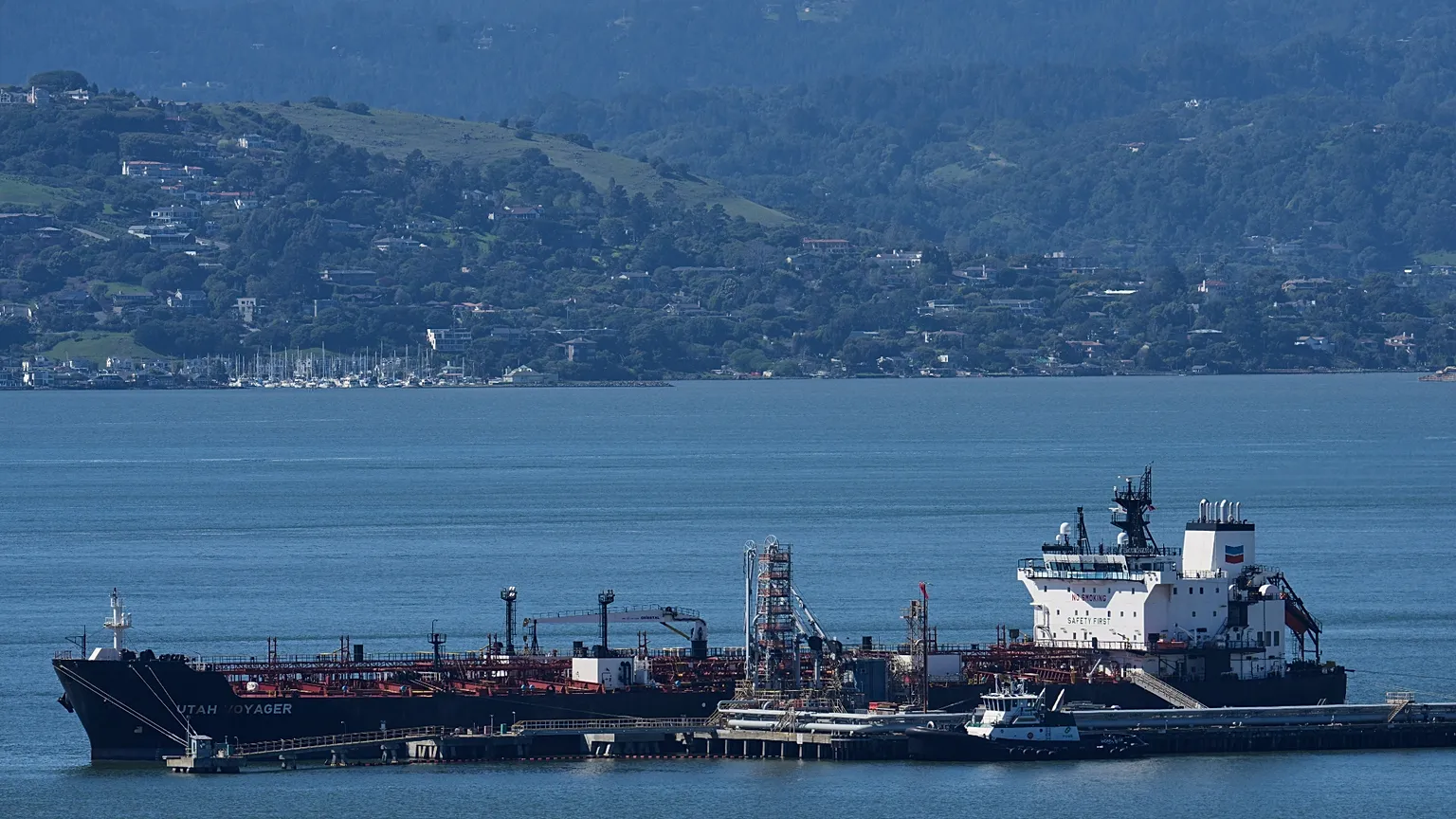
Roughly a fifth of the world’s oil supply normally passes through the Strait of Hormuz. However, shipping through the narrow waterway has largely stopped since the conflict started about a week ago.
Analysts had already predicted that oil prices could cross the $100 mark, but the speed of the increase surprised markets. Prices jumped by about 10% within a minute during early Asian trading, before climbing another 10% roughly 15 minutes later.
Last week, markets appeared relatively calm despite the risk of millions of barrels of crude oil and liquefied natural gas. Natural gas could be trapped in the Gulf if ships avoided the Strait of Hormuz.
But the latest escalation in fighting along with reports of damage to energy facilities in Iran and other parts of the Gulf, quickly changed that outlook.
Some analysts now warn that prices could go even higher if the disruption continues. If the Strait of Hormuz remains closed until the end of March posibilities are that oil could rise above $150 a barrel.
Adnan Mazarei said the price change was not something new given that production has already been affected in several Gulf countries.
“People are realising that this won’t end quickly some of the assurances previously given by the United States now appear unrealistic,” he said
Higher oil prices could also push up the cost of other products. This will include jet fuel and key materials used to produce fertilisers.
Most of the oil and gas shipped from the Gulf is consumed in Asia. There are already signs that buyers in the region are paying higher prices for US gas, with some tankers that were initially headed for Europe turning around in the Atlantic.
Meanwhile, Donald Trump downplayed the rise in oil prices, saying short-term increases were a “small price to pay” for removing what he described as Iran’s nuclear threat.
Trump’s energy secretary also told US broadcasters on Sunday that neither Israel nor the United States was responsible for the strikes on Iran’s energy infrastructure, amid concerns that the conflict could push fuel prices higher at home.
Read Also: Global Oil Prices Surge as Iran Tensions Threaten Supply Chains