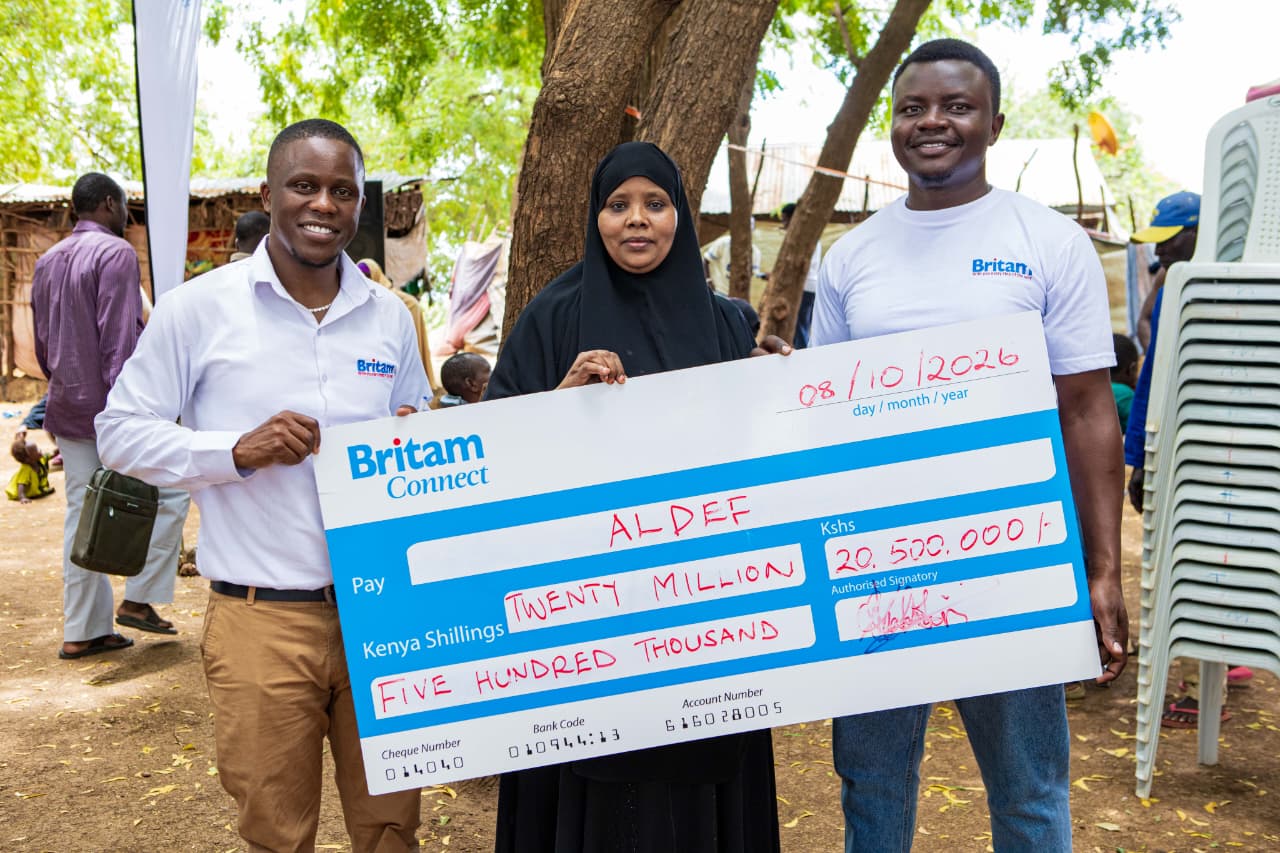
Britam has paid KES20.5 million in flood insurance claims to 3,038 households in Tana River County following flooding during the 2026 long-rains season.
The payout was made through Britam Connect, the inclusive insurance arm of Britam Holdings Plc, under the Britam Mafuriko insurance product.
The affected households are in Sala, Chewele and Madogo wards, areas that experienced heavy flooding during the March to May rainy season.
More than 3,127 families were displaced by the floods in parts of Tana River County. Homes and farms were submerged, while access to essential services was also disrupted.
Many families in the area rely on livestock keeping, small-scale farming and casual work for their income, making them vulnerable when floods affect their livelihoods.
“Floods can destroy the assets and income families depend on, with consequences that extend well beyond the rainy season. This payout gives insured households financial support to recover from those losses and prepare for future risks. Our aim is to make this protection accessible and affordable to communities facing recurring climate shocks,” said Britam Connect CEO Evah Kimani.
The payout was triggered through an Index-Based Flood Insurance (IBFI) project, which uses satellite imagery, data modelling and river-flow data instead of individual assessments of damage.
Under the cover, a payout is made when river flows pass a predetermined level set in the insurance policy.
During the 2026 long-rains season, river flows in the insured wards reached nearly four times their normal levels, exceeding the policy’s trigger point.
The final amount paid was determined after the March to May rainy season ended and the river-flow data for the period was available. Beneficiaries were then verified before the compensation was calculated.
Unlike conventional insurance, the index-based cover does not require an inspection of each household’s losses before a payout is made. The compensation is based on the recorded river-flow levels once the agreed threshold is reached.
The current policy runs until February 2027, meaning the insured households remain covered against qualifying flood events during the October to December short-rains season.
Britam said forecasts of increased rainfall linked to El Niño have raised the risk of further flooding during the short-rains period. Households could receive another payout if river flows cross the set threshold, subject to the terms of their policies.
The programme dates back to a pilot launched in 2023 by Britam in partnership with Oxfam in Kenya, Risk Shield in Zambia and global reinsurer Swiss Re.
The pilot was designed to provide protection to vulnerable households living along the Tana River.
In the pilot, 300 households in Madogo Ward received a KES15 million payout following flooding in the Upper Tana region.
The latest payment has expanded the number of households benefiting from the insurance programme.
The programme has also seen a shift in how households contribute to their insurance cover. Most households that previously received fully subsidised insurance now contribute towards their premiums.
Britam said the change could help move the programme towards a model where households play a bigger role in paying for protection against risks that regularly affect their livelihoods.
Arid Lands Development Focus (ALDEF), the local delivery partner, has been involved in community engagement, implementation and beneficiary verification.
The organisation works with communities that face repeated flood risks and may have limited access to conventional insurance products.
The IBFI project brings together Britam, Riskshield, ALDEF, Oxfam in Kenya and the County Government of Tana River.
The programme is mainly funded by the InsuResilience Solutions Fund (ISF), with premium subsidy support from ISF and Humanity Insured for the 2026–2027 period.
ISF is supported by Germany’s Federal Ministry for Economic Cooperation and Development (BMZ). KfW and Frankfurt School of Finance & Management are involved in implementing and managing the fund.
Oxfam supports donor mobilisation, while Risk Shield works on product development and monitoring. ALDEF handles community engagement and delivery on the ground, while the County Government of Tana River supports implementation.