Performances at this year’s Kenya National Drama and Film Festival leaned heavily on digital finance and banking, with students using the stage to show how everyday money habits are changing.
Guided by the theme Bold Storytellers, Digital Stages: Driving Kenya’s Development Through Theatre and Film, and Equity Bank’s sub-theme on making banking part of daily life, many of the plays and spoken word pieces focused on how technology is shaping how people save, spend and grow their businesses.
Across different performances, students brought out simple, real-life situations. A kiosk owner switches from handling cash to accepting QR and e-wallet payments, making it easier to track sales and access credit. Parents are shown paying school fees digitally for convenience and proper records. Young farmers pool savings through apps to buy inputs and protect their harvests, while women-led groups use instant payments to reach customers beyond their counties.
But it wasn’t just about the benefits. Some performances also highlighted risks, especially around cyber safety and the dangers of careless digital borrowing.
At Kayole South Senior School, trainer Morgan Odera said their spoken word piece tried to connect Kenya’s past with present-day financial inclusion.
“We did a piece on independence and tied it to how banks support students and businesses today,” he said.
The performance, delivered by student Sheila Akinyi, drew mixed reactions due to its ambitious approach. “It’s not easy to merge independence history with current financial topics,” Odera admitted, adding that the student still managed to creatively link the two, including support programmes like Wings to Fly.

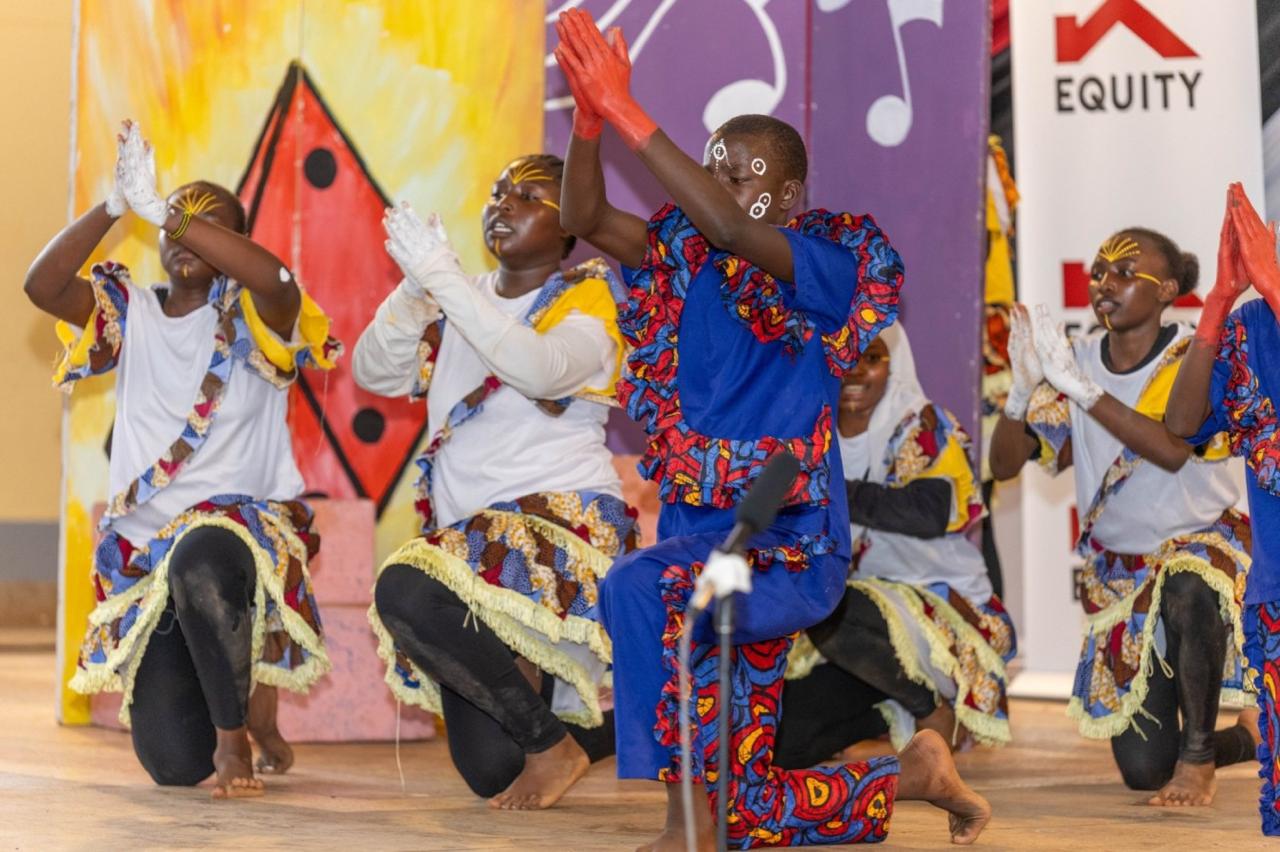
At Precious Blood Riruta, choreographer Amos Othengo Pinto told the story of a small trader through dance. The piece followed a mama mboga who chooses to save her daily earnings in the bank to grow her business.
“After a day with customers, she saves what she has made to build the business,” he explained, noting that they mixed African and hip-hop styles to bring out the message.
A different tone came from the Kenya Institute of Mass Communication, whose play Giza Gizani tackled deeper social issues like abuse of power, silence in families, and injustice. Playwright Dickens Sumba said the aim was to spark conversation and encourage accountability.
“We wanted to show the cost of silence and push for courage and justice,” he said.
Nairobi Regional Director of Education Reuben Kipturgor said the focus on financial awareness is intentional, as students are now being encouraged to create their own scripts and tell stories that reflect real-life challenges.
“This is about letting learners lead and then guiding them to refine their ideas,” he said, urging stakeholders to support young creatives.
Equity Group Holdings has set aside Sh25 million to support the festival, with top performers expected to receive cash awards and trophies at the national level.
The finals are set to take place in Nyeri later this month, followed by a gala event hosted by Education CS Julius Ogamba and Equity Group CEO James Mwangi. The best student performers will later showcase their work at State Lodge, Nyeri, in an event expected to be attended by President William Ruto.