
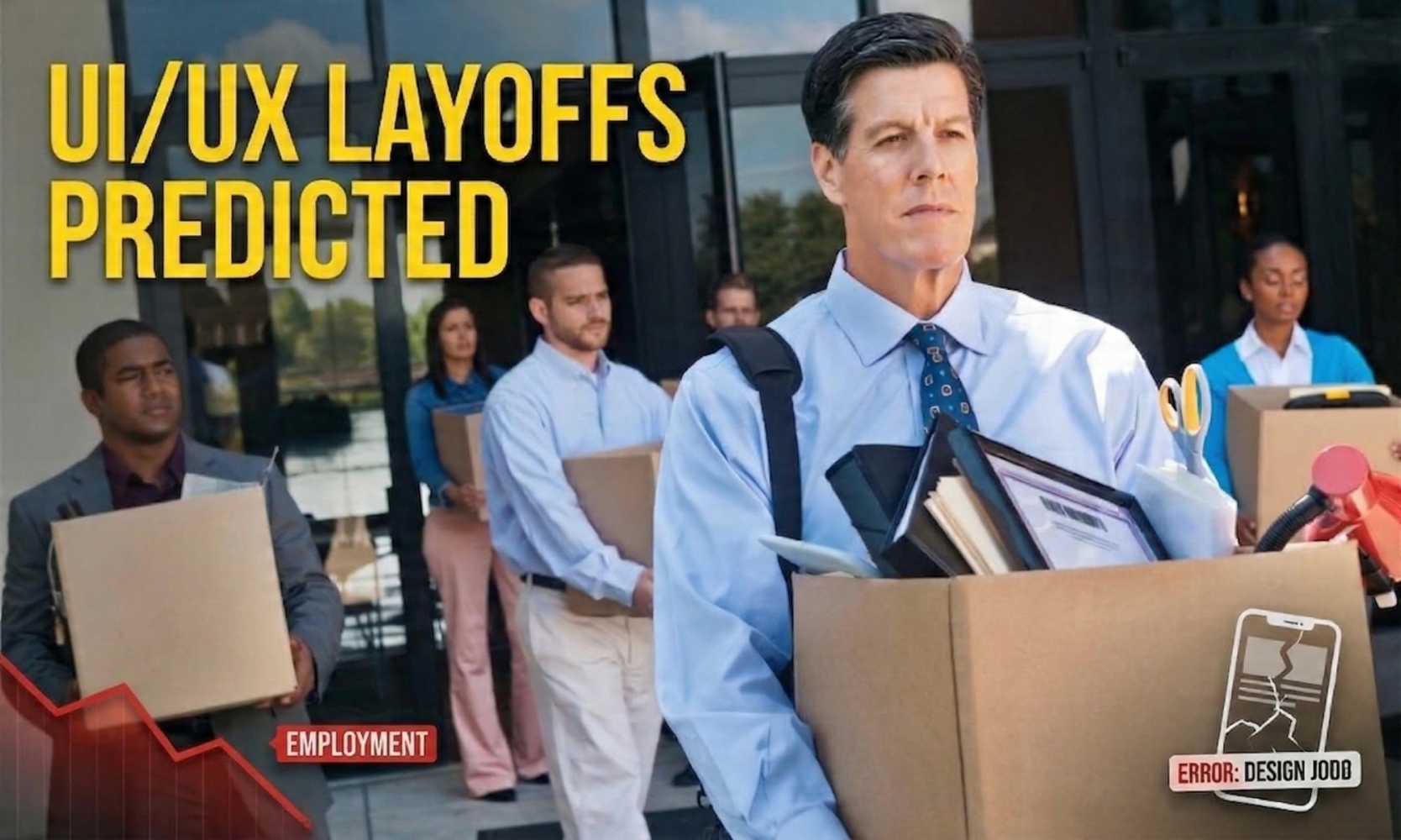
UI/UX Design jobs are at risk after the sudden launch of Google’s new AI tool, Stitch. The tool is officially in beta and it is already sending shockwaves through the tech world.
Experts are now predicting that massive UI/UX design layoffs could be just around the corner as companies look to automate the creative process.
Google Stitch Introduces the Era of Vibe Design
The core of this new disruption is a concept Google calls “vibe design.”
Instead of the traditional, tedious process of creating wireframes and rough outlines, Stitch allows users to describe their business goals in plain English.
You can simply tell the AI how you want a user to feel or provide a few images for inspiration to get a high-fidelity result in seconds.
This approach bypasses the entire first stage of a designer’s workflow, which usually involves hours of research and sketching.
Figma Stock Sinks as Investors Panic Over AI Automation
The impact of the Google Stitch announcement was felt immediately on Wall Street.
Shares of Figma fell around 8% on Wednesday following the news of Google’s update.
The downward trend continued into Thursday as traders expressed concern that dedicated design software might be replaced by AI-native platforms.
Business Insider reports that the stock was trading down another 5% as the market processed the threat.
This stock dip is particularly stinging for Figma, which only recently escaped a blocked acquisition by Adobe.
Investors are now questioning if a standalone design tool can survive in an era where AI can build entire apps from a voice prompt.
Professional UI Design Is Now Free for Everyone
Google Stitch is evolving into a full AI-native platform that does more than just draw boxes.
The tool can now handle voice prompts, meaning a user can literally talk to the design agent to build an app.
The agent can perform real-time design critiques, interview you to build a landing page, and update color palettes as you speak.
“Give me three different menu options,” or “show me this screen in a dark mode palette,” are all it takes to see real-time changes.
This level of automation makes high-end UI design accessible to anyone without technical skills or a design degree.
Why UI/UX Design Face an Uncertain Future
The concern among professionals is that the “entry-level” design job might disappear entirely.
If a product manager or a founder can use Google Stitch to build a professional-grade interface, the need for a large design team shrinks.
Many fear this will lead to a wave of layoffs across the software industry as companies “trim the fat” in their creative departments.
Junior designers who typically handle the “grunt work” of building components and buttons may find themselves without a job description.
The automation of these tasks means that one senior designer using Stitch could potentially do the work of an entire team of five.
Tech Leaders Disagree on the Coming SaaSpocalypse
Not everyone is convinced that the end of the designer is near.
Nvidia CEO Jensen Huang has pushed back against the idea of a “SaaSpocalypse,” calling the stock market’s reaction illogical.
Huang argues that while AI will change how we work, the demand for software will only continue to grow.
However, OpenAI CEO Sam Altman admitted that how software is created and used is going to change forever.
Altman believes that we will eventually have software that is “written for you each time you need it,” rather than static apps.
Figma CEO Dylan Field is staying optimistic, stating that volatility can help strengthen companies in the long run.
The Changing Landscape of the Creative Industry
Whether it leads to immediate layoffs or a slow evolution, the design world will never be the same.
Google Stitch has proven that AI can handle the “busy work” of design, leaving human designers to wonder what their new role will be.
The industry is moving toward a “creative director” model, where the human provides the vision and the AI does the execution.
For now, the industry is watching the stock tickers and the Google Labs updates with bated breath.
Designers who fail to adopt these AI tools quickly may find themselves left behind in the most competitive job market in decades.
READ ALSO; Apple Released MacBook Neo as Its Cheapest MacBook Ever