The country’s top business organizations are pressing for an instant cessation of the 2025 Standards Levy Order, as it is expected to increase the cost of doing business while also taking away the competitive advantage of local manufacturers.
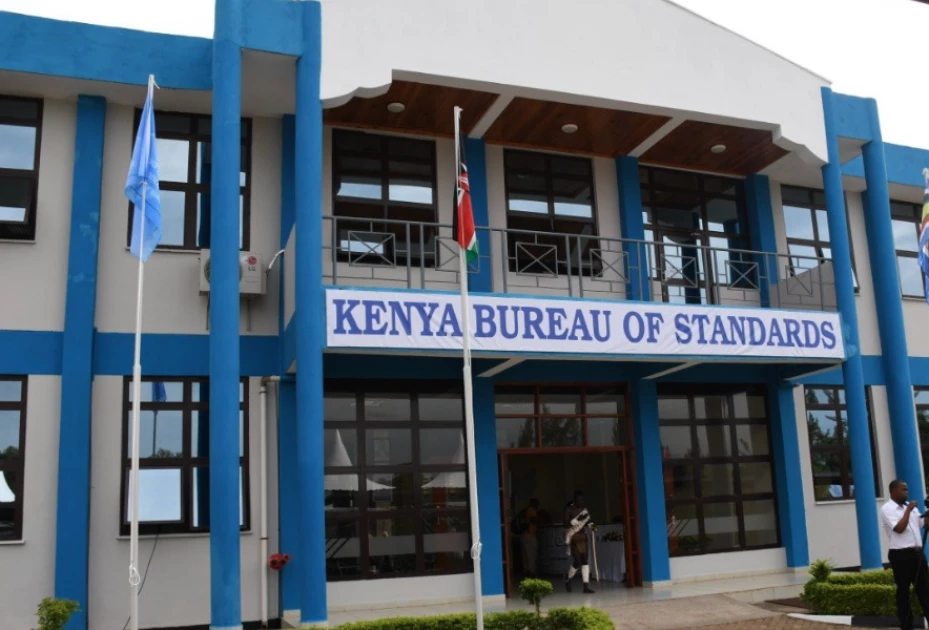
The government introduced the order via the Kenya Bureau of Standards (KEBS) as Legal Notice No. 136 on August 8, 2025. The order requires all manufacturers to pay 0.2 percent of their monthly turnover, excluding VAT and any discounts, with a cap.
Although the rate remains constant at 0.2 percent, the new system increases the maximum amount payable to a great extent. Now, businesses can be required to pay up to KES 4 million each year for the first five years, while the amount increases to a maximum of KES 6 million each year after that.
The increase is ten times higher than the previous cap of KES 400,000 each year under the 1990 Standards Levy Order. At the maximum rate, businesses can be forced to pay up to KES 11,000 each day for the first five years, increasing to KES 16,000 each day thereafter, including weekends and public holidays.
Effects on Manufacturers
The business community has stated that the new system of charging the levy is placing an unprecedented financial burden on the country’s productive sector. The country needs to finance growth through the financial system but also needs to be careful not to take any measures that can affect business negatively.
They also argue that the additional cost will be passed to the consumer, resulting in an increase in price and reduced competitiveness for local manufacturers. The business associations also argue that the increased levies, fees, and charges by various government agencies are undermining the country’s competitiveness both locally and globally.
Competitive Disadvantage
The private sector argues that imported goods are not subject to the Standards Levy. This is not an even playing field for local manufacturers. The Standards Levy is unique to Kenya and is not applicable to any of the East African Community (EAC) countries. This is a concern for the business community because it may drive them to other countries.
The business community also argues that the quality assurance services provided by KEBS have been made possible by the support of the manufacturing sector. The services are not only beneficial to locally manufactured goods but also imported and locally manufactured goods.
As a result, they warn that the levy risks disadvantaging domestic producers in regional and global markets.
Sector-Specific Concerns
The associations have also raised concerns over the classification of naturally grown commodities such as flowers as manufactured goods, describing it as a legal misclassification.
Flower growers, represented by the Kenya Flower Council, are already subject to mandatory inspections, certifications and licensing by other government agencies. Extending the standards levy to the sector, they argue, amounts to double taxation and regulatory overreach.
Similar concerns have been raised by the mining and quarrying sectors, which already operate under multiple regulatory regimes and statutory levies.
Service Delivery Questions
Industry groups also question the link between the levy and the services provided by KEBS.
They note that companies already pay substantial fees for standardisation marks, inspections, testing and certification services, which have been rising in recent years.
According to the associations, the new cap could push annual payments to more than KES 8 million per company to a single regulator, raising concerns about whether the levy is being used as a revenue mobilisation tool rather than a service-based charge.
Court Case Pending
The matter is currently before the High Court, with a hearing scheduled for April 13, 2026.
While respecting the ongoing judicial process, the business associations say they remain committed to constructive engagement with the government to protect industry competitiveness, jobs and consumer welfare.
Key Demands
The associations have proposed several measures, including:
- Immediate suspension of the Standards Levy Order, 2025 and a return to stakeholder consultations.
- Independent review of the financing framework of KEBS to align it with constitutional and service-based principles.
- Strengthened transparency and accountability through annual reporting and audits on the use of levy funds.
- Creation of a joint public–private working group involving KEBS, the Ministry of Investments, Trade and Industry (MITI), regulators and business organisations.
- Exemptions for sectors not directly regulated by KEBS, including horticulture, pharmaceuticals and firms operating under special schemes such as the Export Processing Zones Authority (EPZA).
- Alignment of levy charges with global trade facilitation principles under the World Trade Organization to ensure that fees correspond to actual services provided.
Joint Industry Position
The statement was issued by a coalition of Business Membership Organisations advocating for a predictable and competitive regulatory environment.
The groups include:
- Association of Kenya Suppliers (AKS)
- Cereal Millers Association (CMA)
- Fresh Produce Exporters Association of Kenya (FPEAK)
- Eastern Africa Grain Council (EAGC)
- Kenya Association of Manufacturers (KAM)
- Kenya Flower Council (KFC)
- Kenya Private Sector Alliance (KEPSA)
- Kenya Tea Growers Association (KTGA)
- Kenya Chamber of Mines (KCM)
- Retail Traders Association of Kenya (RETRAK)
- Shippers Council of East Africa (SCEA)
- The organisations say they have united to advocate for fair, predictable and competitive policies that support Kenya’s economic growth and industrial development.