
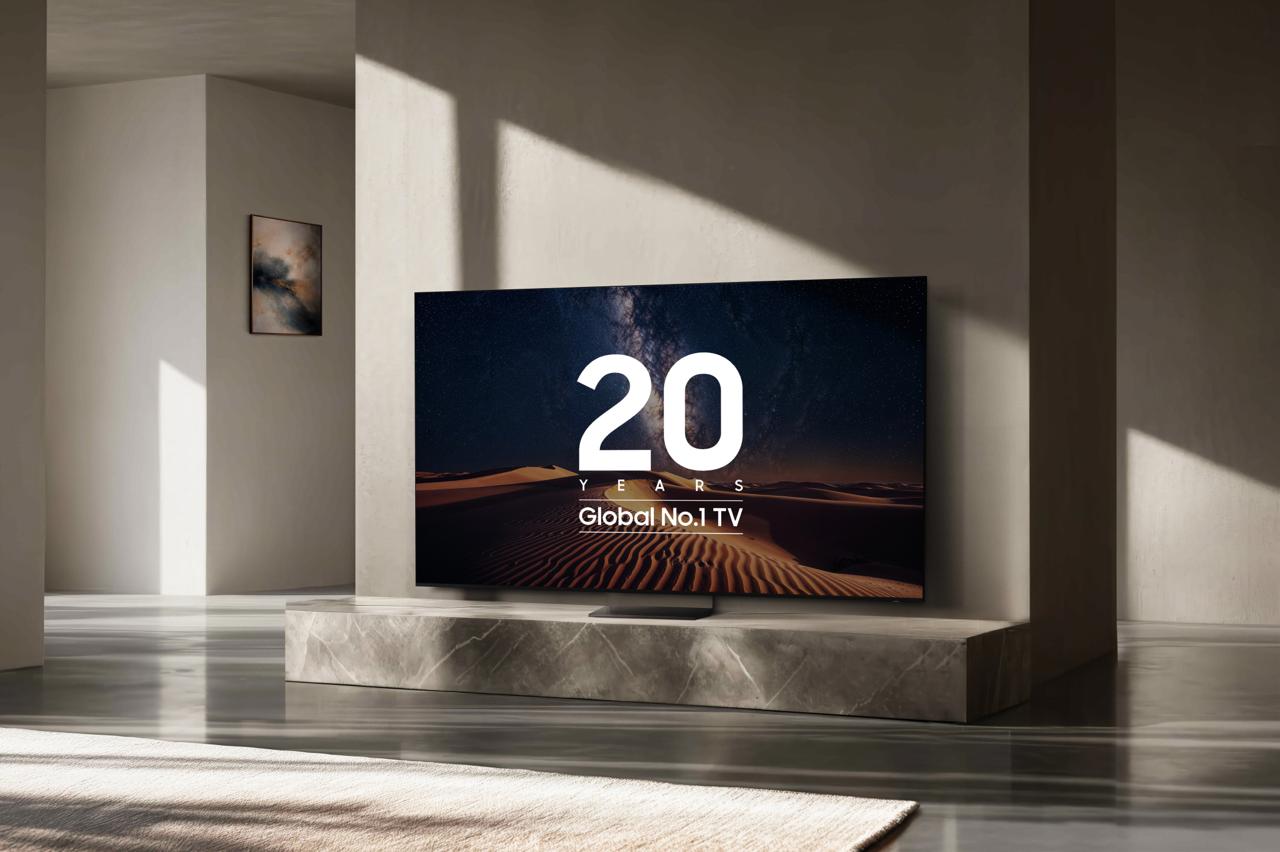
Samsung Electronics has maintained its position as the leading TV brand globally for the 20th consecutive year. This is a position the company has maintained since 2006.
Samsung Electronics managed to achieve 29.1 per cent of the total TV market globally in 2025, according to statistics from market research firm Omdia. These statistics demonstrate the company’s ability to maintain its position for two decades.
Samsung Electronics has been able to achieve significant success in the high-end TV market. In high-end TVs costing more than $2,500, the company managed to achieve 54.3 per cent of the market. Additionally, the company also maintained its position in the TV market for those looking for TVs costing more than $1,500, achieving 52.2 per cent.
This has been achieved through the introduction of other TV models such as Neo QLED and OLED, which are preferred by customers looking for high picture quality and larger screens.
SW Yong, President and Head of Visual Display Business at Samsung Electronics, commented on the company’s ability to maintain its position for 20 years.
“Samsung has maintained the number one position for 20 consecutive years, and it is because our customers trust our brand,” he said. “When people buy a TV, they expect it to serve them for many years. We continue to innovate and improve our technology, and that’s what has helped us maintain our customers’ trust.”
Two Decades of Changes in TV Technology
Samsung Electronics has been at the top of the TV market for 20 years, having achieved the position for the first time in 2006 after introducing its Bordeaux TV design, which became popular among customers because of its design.
Over the years, the company has managed to introduce different technologies that have changed the TV viewing experience.
In 2009, Samsung took a major leap from old screens to LED TVs, as they were slimmer and used less power.
Two years later, Samsung introduced Smart TVs in 2011. Smart TVs enable users to connect their TVs to the internet.
Further, Samsung has also tried to improve its design. For instance, Samsung introduced Serif TVs in 2015. Serif TVs were meant to complement home décor.
In 2017, Samsung introduced Frame TVs. Frame TVs enable users to use their screens to display art when not watching TV.
In 2017, Samsung also introduced QLED TVs. QLED TVs that uses quantum dot technology to improve picture quality.
The company later moved into higher resolution displays. In 2018, it released 8K televisions with much sharper picture quality compared to 4K screens.
Another major step came in 2020 when Samsung introduced MICRO LED technology, which improved brightness, colour and contrast, especially for very large screens.
Focus on Premium and Next-Generation TVs
Samsung continues to focus on high-end television models as competition in the global market grows.
The company has been expanding its OLED and Neo QLED TV ranges, offering larger screens and improved display quality.
It is also increasing its Mini LED TV options to reach more customers across different price ranges while still maintaining better brightness and contrast.
At the same time, Samsung has been adding artificial intelligence features to its TVs. These systems help adjust picture quality, sound and other settings automatically depending on what the viewer is watching.
After 20 years at the top of the global TV market, Samsung remains one of the most recognised TV brands worldwide, with products available across different screen sizes and price categories.
READ ALSO: Samsung Galaxy S26 Ultra Wins Best in Show Award at Mobile World Congress 2026