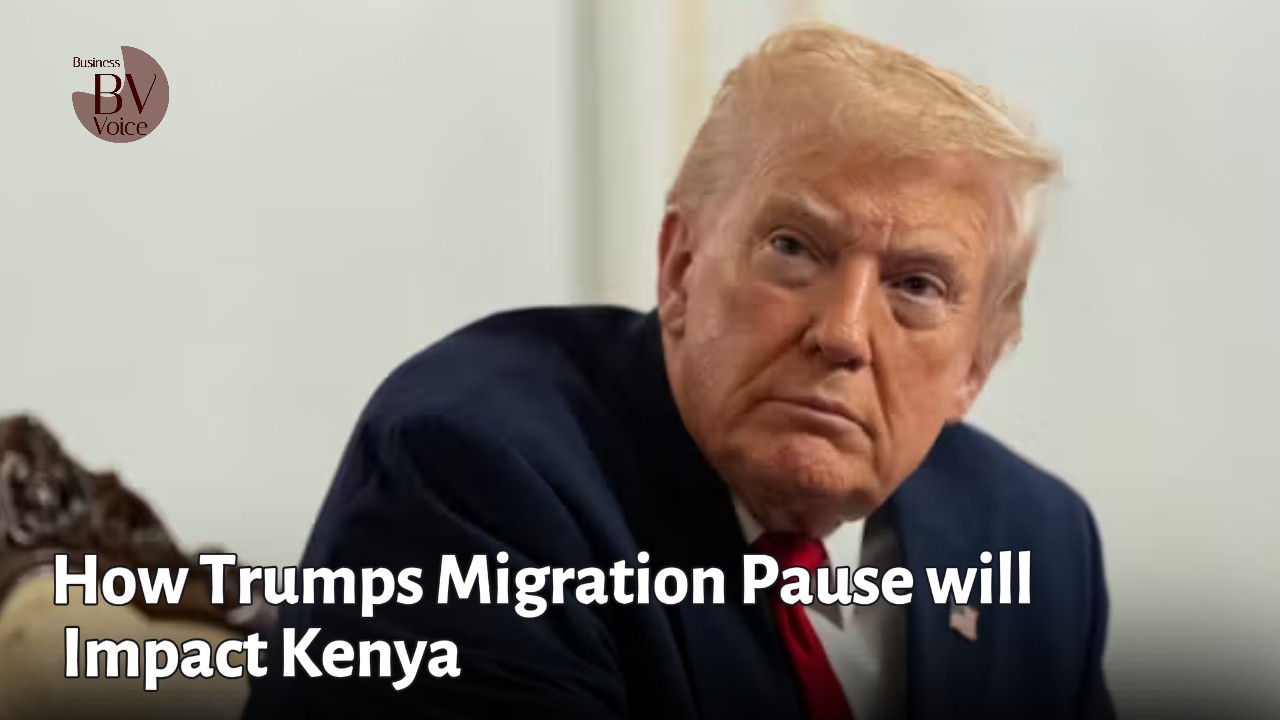
Following a security incident in Washington D.C., US President Donald Trump has issued a directive that could reshape global mobility for decades. His vow to “pemanently pause migration” from what he termed “Third World Countries” has left nations scrambling for answers.
For Kenya, an economic hub often cauht in the crosshairs of shifting US foreign policy, the stakes are critical. But beyond the headline, what exactly was said and what does it mean for your business?
The New Rule: Only ‘Net Assets’ Allowed
The global uproar came after one violent act in Washington, D.C. On Thursday, an Afghan national allegedly shot two members of the National Guard, and in response President Trump tweeted out an immediate new policy at “Truth Social”:
“I will permanently pause migration from all Third World Countries to allow the US system to fully recover… and remove anyone who is not a net asset to the United States.”
This is the pivot point.
Administration prior to the present we’re very focused on “threats to security.” However, the administration’s new language indicates that a “transactional” measure was used concerning “net assets”.
Within the Immigration Space, however, this means much more than just a simple background check. It implies a fairly stringent test based on financial means and almost certainly will require substantial proof of strategic assets or immediate employability prior to considering a Visa for entry into the United States.
Which Third World Countries are on the List?
“Third World” is a phrase that is now considered outdated and is associated with the Cold War; however, it once again has gained prominence within U.S. Policy.
Because there is no listed official source released by the White House at this time, it will not be feasible to determine exactly which nations/professions will be included in the list or waiting to see what may transpire.
Analysts are focusing their attention on two general models for analysis that may assist them in this area:
- (Countries of Concern): This would include the 19 countries currently identified that face enhanced vetting; specifically Afghanistan, Somalia, Sudan, and Yemen, etc.,
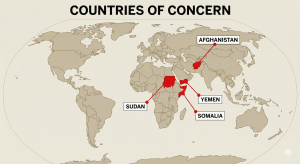
- (General Economic Definition): If the Administration continues to use “Third World” as a synonym for developing countries then the list may expand greatly to include many major economies throughout Africa, South America and significant portions of Asia.
- For Kenyan travelers, this ambiguity is dangerous. Until the Department of Homeland Security clarifies the criteria, visa processing for students, tourists, and business delegations could face indefinite delays.
The Impact on Kenya
Kenya stands to face considerable economic repercussions through a reclassification process that could immediately impact Kenya’s economy.
1. Remittance Lifeline: Kenya’s diaspora community sends their families money back home or to send their relatives to school. With the demise of the remittance pipeline, the shilling will decrease in value due to decreased inflow of money from outside Kenya.
Secondly, with the removal or closure of opportunities and channels available for Kenyans to migrate permanently to the United States, there will be a stagnation in the growth of these funds.
2. Brain Block: The debate surrounding the out-migration of educated professionals from Kenya has evolved from a “brain drain” to a “brain block” where Kenyan professionals in technology, healthcare and engineering depend on moving to other countries for job advancement and for knowledge transfer to occur.
Additionally, because of an increased reliance on the “brain block,” the remaining (Kenyan) workforce will not have opportunities to gain technical training or knowledge from outside Kenya as a result of the blockage of global migration.
3. AGOA and Trade Kenya’s Minister of Trade recently stated that Kenya is currently in discussions regarding the future of its trade relations with the United States. Being re-classified as a “Third World” country under the executive orders may complicate these discussions.
An increased risk premium for investors who may fear that a deterioration of the diplomatic relationship could then spill over into tariffs on goods exported from Kenya into the United States.
What to Expect As A Business Owner in Third World Countries
1. Expect delays: Business owners should assume that if employees or partners are travelling to the United States, the employees and partners will have significantly longer wait periods before they will be issued travel documentation.
2. Definition Risks: As the classification of countries is fluid and subject to change overnight, business owners need to keep a close watch for changes in the US Department of Homeland Security’s classifications of countries.
3. Diversification: If you rely exclusively upon one market for your business, now is the time to start diversifying and seeking opportunities to sell your products in different countries.
4. Diversify: Reliance on a single market for labor mobility or trade is becoming increasingly risky.
FREQUENTLY ASKED QUESTIONS (FAQS)
1: What countries qualify as “Third World Countries”?
The U.S. government has not yet created an official list of those countries, however, the U.S. government may be defining it based on the 19 countries (countries of concern) and also has a broader economic definition, which may include many nations from Africa and Asia.
2: What is “net asset” status and how does it affect my Visa Application?
This new designation means that applicants will need to show that they are able to contribute financially to the American Economy immediately; either by showing wealth, high demand or job creation capabilities.
If an applicant does not have that ability, they must show that they will not require any Social Services to survive in the U.S. after they arrive in the U.S.
3: Is Kenya currently subject to a U.S. Migration Ban on Third World Countries?
Not at this time. However, because of the term “third world countries”, there is ambiguity with this designation and therefore Kenya could potentially be affected by some sweeping restrictions on migration, which could lead to delays in obtaining a Visa.
4: Will this have an impact on Students and Tourists?
Yes, very likely. The way the “permanent pause” language is written, it addresses migration (Non-immigrant Visa), however, the language relating to “net assets” suggests more restrictive vetting for all travelers to make sure they have enough money to support themselves.
5: How will this affect the AGOA Trade Agreement?
The AGOA is a trade agreement and separate from immigration; however, being classified as a “third world” nation could definitely harm diplomatic relations. In addition, it could complicate any ongoing negotiations with AGOA, currently in process.






[…] READ ALSO: Trump Freezes Migration From All Third World Countries […]