
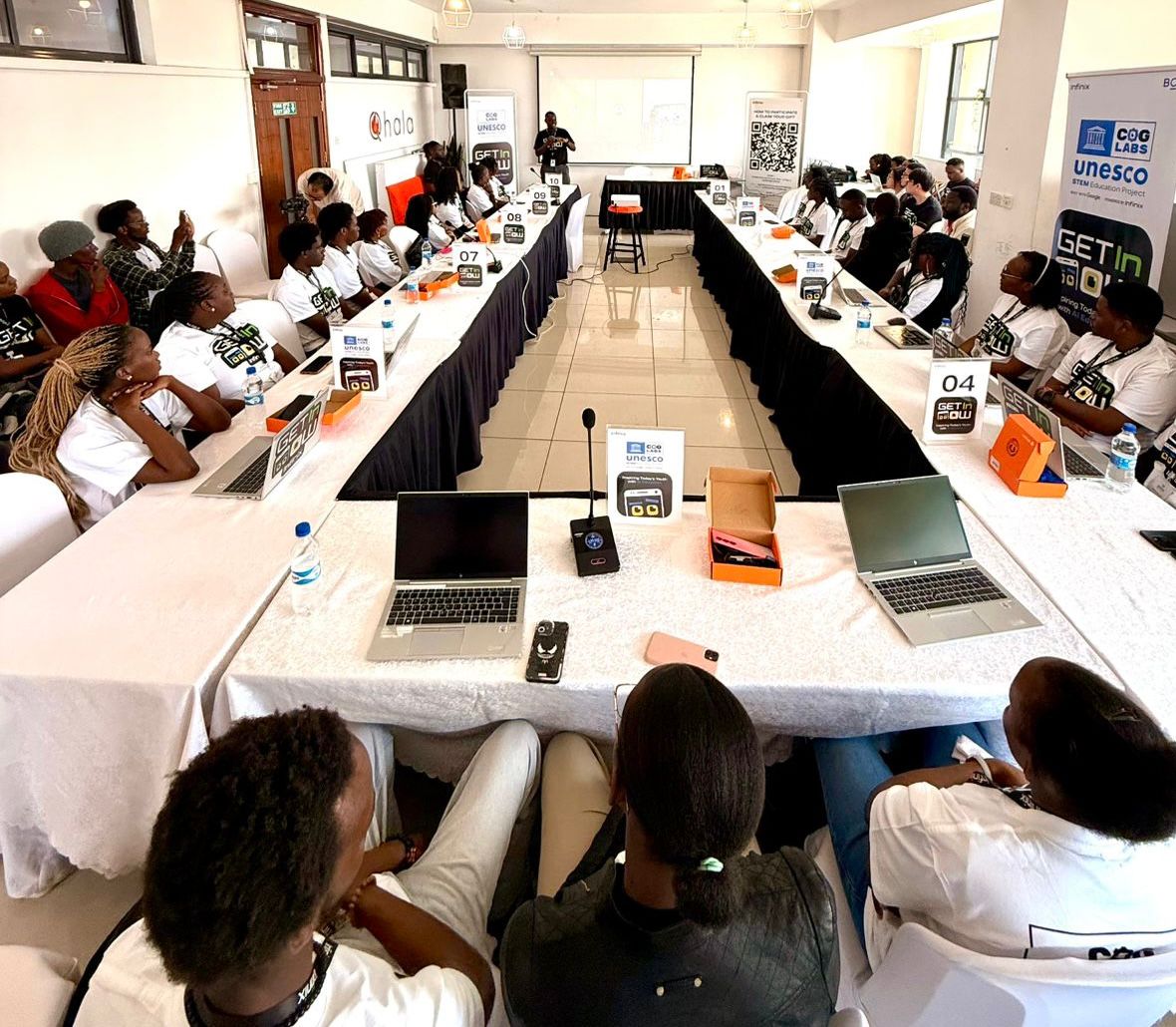
UNESCO, in partnership with Infinix and Qhala on Tuesday August 5th hosted the CogLabs UNESCO Robotics Workshop 2.0 an immersive event that stems from a global initiative designed to introduce university students to robotics, artificial intelligence (AI),and 3D printing using mobile-first, low-cost technologies.
More than 20 Kenyan university students converged on to take part in the Workshop where they were challenged to design, code, and build robots using open‑source kits, repurposedsmartphones, and affordable AI tools such as Scratch and Teachable Machine.
During her opening remarks at CogLabs UNESCO Robotics Workshop Asha Mweru, Strategy Lead at Qhala, challenged the students to think big and bold not just in Kenya but far beyond. “You actually have the chance to build something not just for Nairobi, not just for Kenya, but for Africa and for the world.I hope to see the next Ironman or Star Wars created by someone who started right here,” she said.
The day’s programme featured Introduction to AI, machine learning model creation, coding with Scratch, responsible AI by design, as well as an E3bot robotics challenge.
Students were encouraged to share their creativity through social media challenges, show casing both the robots they’ve built and the stories behind them.
Infinix, known for manufacturing advanced smartphone technology widely accessible,underlined the role of affordable tech in empowering youth.
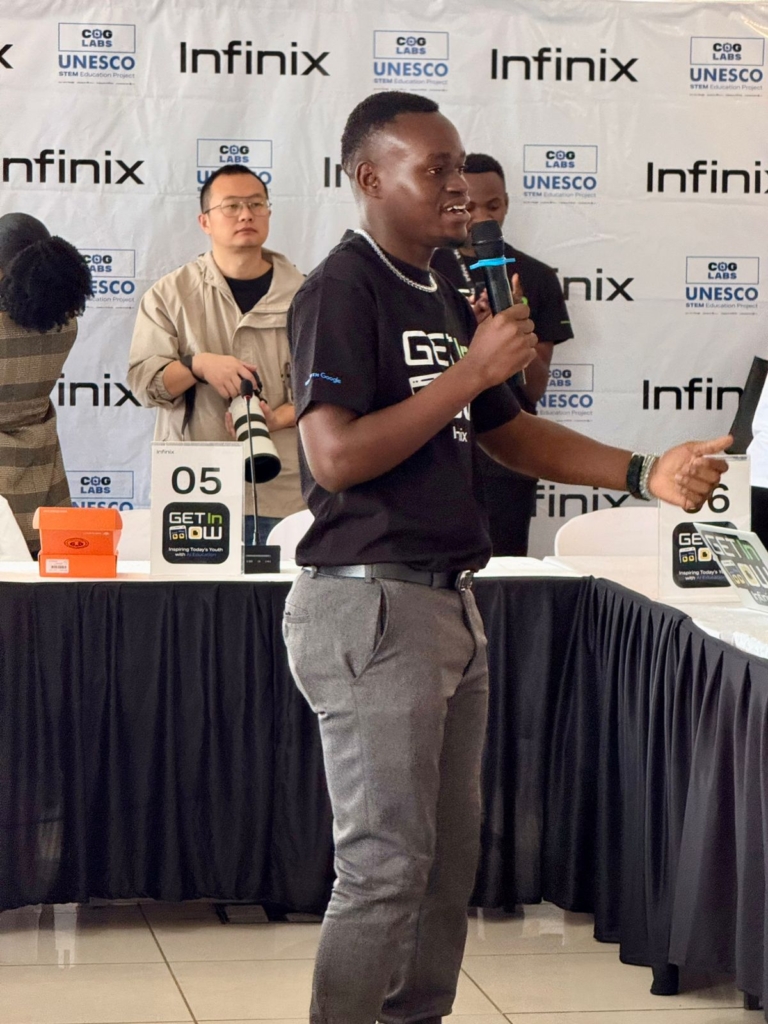
“As a brand, we are honored to be part of this project. Our mission is to provide accessible tech solutions for every Kenyan and that includes embedding AI tools directly into our devices to help people create, connect, and innovate,” said Stephen Otieno, Infinix PR Lead.
E3bot founder Joan Nadal, whose journey began by designing a robot for his young daughter,shared the global impact of the initiative.
“We’ve trained more than 3,000 teachers and reached over 20,000 students in 35 countries,”Nadal said. “This project is about more than robotics it’s about building a global community ofmakers who use technology to solve real‑world problems.”
Nadal, who also conducted the first workshop in Nairobi in 2023, said this year’s edition reinforces UNESCO’s commitment to promote inclusive STEM education, particularly in Africa,where mobile‑first learning models are thought to be key to reaching young innovators at scale.
In its two year in Kenya, CogLabs aims to make STEM education accessible and inclusive, this mobile‑first approach removes the need for expensive desktops or high‑end lab equipment, making roboticsand AI education more inclusive than ever before.
Participants will work with 3D-printed robot kits, repurposed smartphones, and tools such as Scratch and Teachable Machine to build, train, and code their own robots.
Read Also: Qhala Leads Africa AI Week 2025 to Empower Teachers and Bring AI into Classrooms




[…] Read Also: Students Turn Smartphones Into Robots at CogLabs Mobile-First AI Workshop […]