
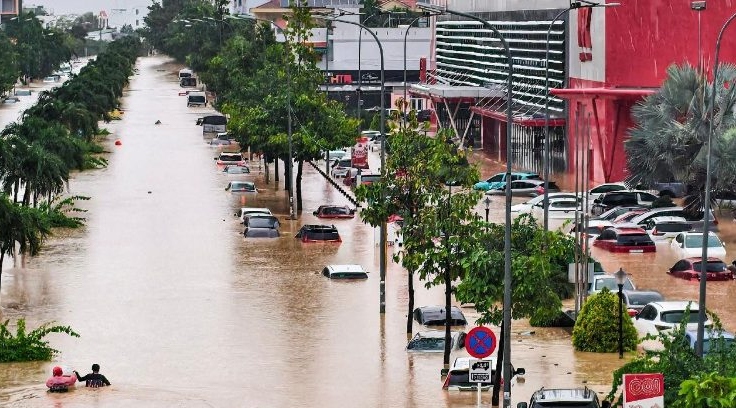
Nairobi’s primary economic artery has been severed as record-breaking floods paralyze the city’s logistics hub.
Mombasa Road, the gateway for goods moving from the Port of Mombasa to the capital, remains largely impassable as of Saturday evening due to rising floods.
The disruption has triggered a massive bottleneck in the national supply chain, leaving hundreds of long-distance trucks stranded in the deluge caused by the floods.
For businesses operating in the Industrial Area and South C, the economic toll of these floods is mounting by the hour.
Flash floods have breached warehouses and manufacturing plants, destroying delicate machinery and raw materials in their wake.
According to the Kenya National Highways Authority (KeNHA), several sections of the A104 highway are currently submerged under the floods.
This arterial failure doesn’t just affect local commuters; these floods halt the transit of essential goods to the entire East African hinterland.
Retailers in the CBD are already reporting delays in restock orders, as delivery vans remain trapped in the gridlock on Uhuru Highway caused by the floods.
The aviation sector is facing its most significant crisis since the 2024 rainy season, with Jomo Kenyatta International Airport (JKIA) struggling to manage the floods.
The Kenya Airports Authority (KAA) confirmed that several international flights were rerouted to Mombasa and Entebbe due to floods on the runways.
The diversion of cargo flights during these floods is particularly painful for Kenya’s flower and horticultural exporters.
Fresh produce destined for European markets is currently sitting in refrigerated trucks that cannot reach the airport’s cold rooms because of the floods.
Financial analysts estimate that the logistics sector alone is losing millions of shillings every hour that the floods keep the roads closed.
Businesses in the Industrial Area are struggling with a double-edged sword: physical damage from the floods and a total lack of workforce mobility.
With the Kenya Power and Lighting Company (KPLC) reporting outages, the darkness has only complicated the rescue efforts from the floods.
Submerged substations in the low-lying areas of Nairobi West and South B have made it impossible to restore power safely during the floods.
This lack of electricity has halted the processing of perishable goods, leading to significant inventory losses as a direct result of the floods.
The “just-in-time” delivery models used by modern tech and e-commerce platforms in Nairobi have completely collapsed under the pressure of these floods.
Delivery riders for platforms like Glovo and Jumia have been grounded, as navigating streets turned into rivers by the floods poses a fatal risk.
Beyond the immediate loss of goods, the long-term damage to Nairobi’s infrastructure from the floods will require a massive budgetary reallocation.
The Kenya Meteorological Department (KMD) has warned that the “intense pockets” of rain fueling these floods will continue through Monday.
This forecast suggests that even when the floods recede, the structural integrity of roads like Mombasa Road will need urgent assessment.
In a rare move to mitigate the crisis, authorities have temporarily waived toll fees on the Nairobi Expressway to bypass the floods below.
This waiver allowed some light traffic to move, but heavy cargo trucks remain stuck in the floods on the lower-tier roads.
Small and medium-sized enterprises (SMEs) are expected to be the hardest hit by this economic freeze brought on by the floods.
Many lack the comprehensive insurance required to cover “acts of God” or business interruption caused by these devastating floods.
Supply chain experts are now calling for a radical redesign of the city’s drainage systems to protect the economy from future floods.
The current drainage capacity was clearly not built to handle the 100mm rainfall spikes that have triggered these urban floods.
As the city enters another night of heavy downpours, the focus remains on search and rescue from the floods, but the economic cleanup will take months.
Investors are keeping a close eye on official government responses, looking for signs of a long-term urban resilience plan against floods.
The vulnerability of Kenya’s “Silicon Savannah” to seasonal weather patterns and floods remains a major hurdle for foreign direct investment.
For now, the priority is clearing the drainage canals in the Industrial Area to prevent the further spread of the floods into factories.
Logistics firms are being advised to use the Standard Gauge Railway (SGR) to bypass the floods affecting bulk road transport.
The SGR terminal in Syokimau has become a rare island of functionality in an otherwise submerged landscape dominated by the floods.
However, without the ability to move goods from the inland container depot to warehouses, the relief from the floods is only marginal.
As we move into the next week, the pressure on the national government to declare a localized state of emergency due to the floods is growing.
The intersection of extreme weather and economic fragility has never been more apparent than in this March 2026 crisis of floods.
Even residential areas like Ngong Road and Kenyatta Avenue have seen businesses shut down as the floods reached their doorsteps.
The Kenya Red Cross continues to report on the rising number of families displaced by the floods in informal settlements.
In these areas, the floods have not just taken property but have wiped out the daily income of thousands of casual laborers.
The manufacturing sector in Nairobi will likely see a contraction this quarter due to the sheer scale of the floods.
Repairing the silt-damaged machinery in the Industrial Area will require technical expertise that is currently hampered by the floods.
Every drainage pipe that remains blocked further extends the life of these floods, pushing the city’s recovery date further into the future.
Urban planners are warning that without a shift in how we pave our city, the floods will only become more frequent and more expensive.
The March 2026 floods will be remembered as a turning point for how Nairobi views its economic and environmental security.
Until the rain stops, the cycle of damage and disruption from the floods continues to haunt the capital’s financial district.
READ ALSO; Jeff Nippard Confirms the Sudden Passing of Fiancée Stephanie Buttermore