
Kenya is making an ambitious play to position itself as the investment destination for Artificial Intelligence in Africa, and it is doing so by leveraging its traditional advantage in renewable energy as the basis for its new industrial strategy in digital technologies.
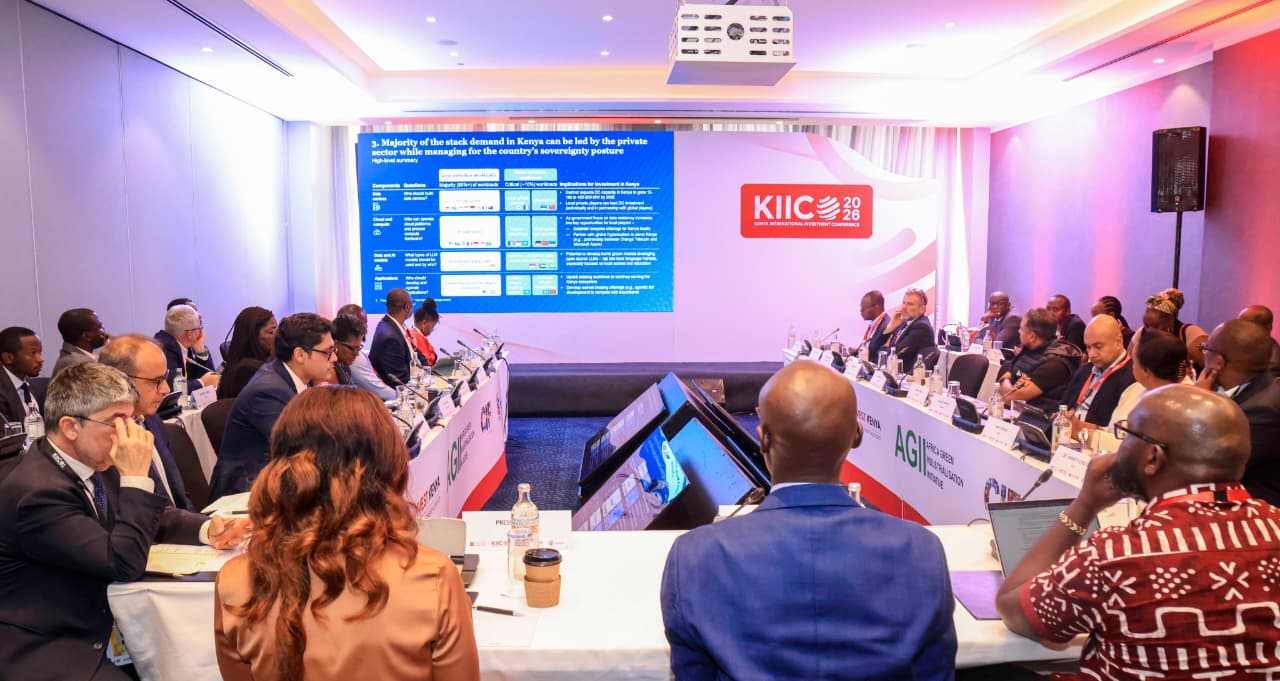
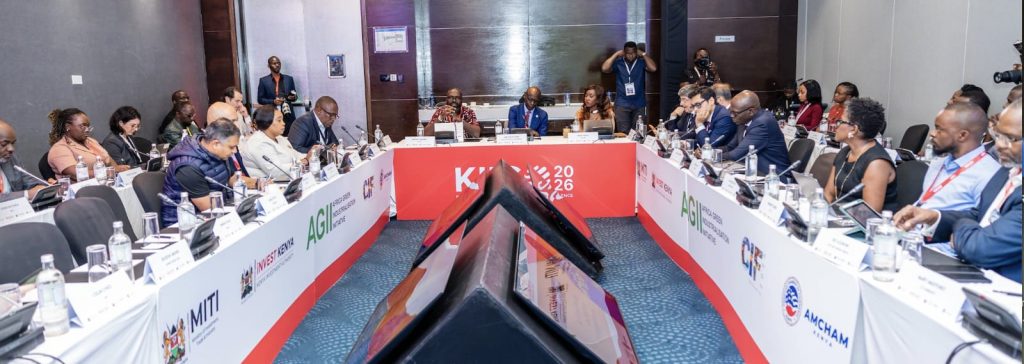
At the Kenya International Investment Conference (KIICO) 2026, the high-level AI Roundtable, organized by the Office of the Special Envoy on Technology, KenInvest, and the American Chamber of Commerce, provided an indication of the direction that the country is likely to take.
The conversation revolved around the potential for the country to position itself as a full-stack destination for Artificial Intelligence.
What sets Kenya’s proposition apart is the recognition that AI is no longer just a software story. It is increasingly an infrastructure story, one tied to electricity, capital expenditure, regulatory certainty, data systems, and human capital. Participants argued that Kenya’s renewable energy mix gives it an edge at a time when many global AI markets are running into power constraints. In this framing, energy policy becomes economic policy, and digital strategy becomes investment strategy.
The numbers cited at the roundtable indicate that the market is beginning to move. The strategic brief referenced the region’s first hyperscaler deployment, backed by $50 million in upfront risk capital, as well as planned investments of between $250 million and $300 million for AI factories. It also pointed to broader infrastructure activity involving cloud, data centre, and sovereign stack deployment. While these figures still represent an early-stage market, they suggest Kenya is being taken seriously as a future compute location.
Policy choices are now commercially important. Investors want regulatory clarity but not regulatory overreach. Recommendations included a 90-day sandbox framework to let innovators test systems under guardrails, strengthening existing institutions rather than creating new bureaucracies, and building interoperable digital public infrastructure under the so-called “Kenya Stack.” For investors, that signals a state trying to lower friction without abandoning oversight.
The commercial logic of localization also stood out. Innovators are facing high costs to access frontier models, making scale to one million users commercially difficult in many African markets. The conclusion was that capital must increasingly support localized AI models better suited to local bandwidth conditions, languages, and sector needs. Africa cannot simply import the economics of Silicon Valley and expect them to work unchanged.
Talent was treated as a core investment pillar rather than a social afterthought. Participants said Kenya must build domestic AI capability, fix university-industry gaps, increase public-sector AI fluency, and create channels for the diaspora to contribute. There were also discussions about attracting global experts through residency and tax incentive structures, suggesting that Kenya’s AI ambition is not only about retaining talent, but also about becoming a magnet for it.
Past Achievements – Building the Foundations
Kenya’s current AI push builds on a series of earlier milestones. In 2025, the government launched the National Artificial Intelligence Strategy (2025–2030), a five-year plan to position the country as Africa’s leader in AI innovation. Flagship projects included modernizing national digital infrastructure, strengthening sovereign data systems, and embedding AI into agriculture, health, and public service delivery.
Universities such as the University of Nairobi and Jomo Kenyatta University of Agriculture and Technology began integrating AI research into their programs, while institutions like KEMRI explored AI applications in medical research. Startups and hubs also emerged, with initiatives like LLM Labs Ke deploying AI models across healthcare, education, and agriculture, impacting over 100,000 lives. Venture capital inflows reached nearly $15 million in 2023, signaling early investor confidence.
These achievements laid the groundwork for Kenya’s current ambition: to align energy, infrastructure, regulation, research, finance, and skills into a coherent platform that can attract global capital while fostering local innovation.
READ ALSO: Kenya’s Ambassador Phillip Thigo Receives International Acclaim as a Visionary in AI Governance