
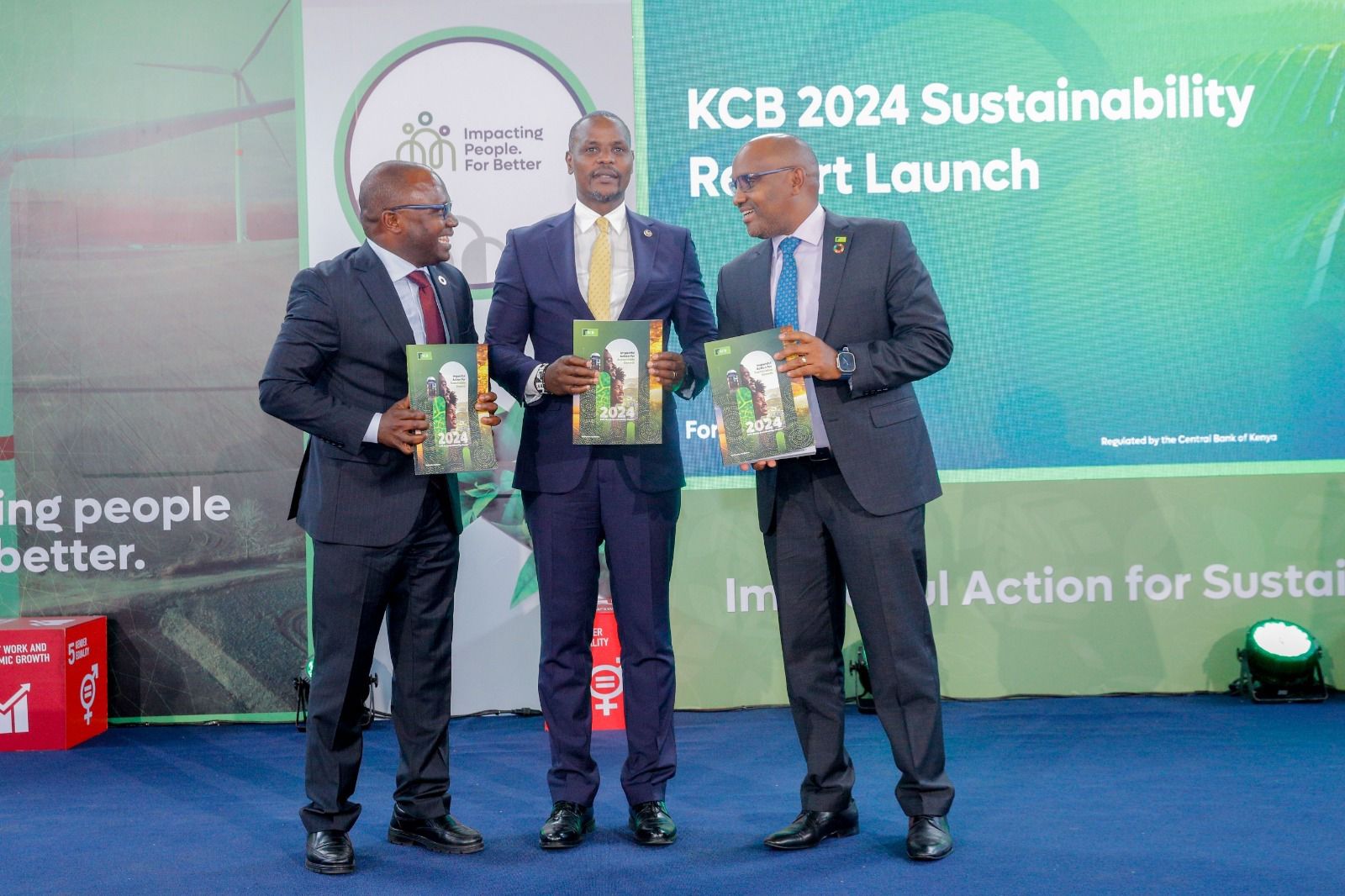
KCB Group has deepened its commitment to sustainable finance, screening loans worth KShs. 578.3 billion for environmental and social risks in 2024 and disbursing KShs. 53.2 billion in green loans to support Kenya’s transition to a low-carbon economy.
As highlighted in the lender’s 2024 Sustainability Report, this brings the value of loans reviewed under the Group’s Environmental and Social Due Diligence (ESDD) process to more than KShs. 2.5 trillion since 2020.
The move shows KCB’s growing role in facilitating projects supporting climate action and inclusive growth.
The bank’s green portfolio grew from 15% in 2023 to 21.32%, driven by investments in clean energy, e-mobility, blue economy, and climate adaptation projects. Of the total green loans, KShs. 24.1 billion was verified through the Climate Assessment for Financial Institutions (CAFI) tool, enhancing transparency and accountability in reporting.
KCB Group also allocated KShs. 913 million, or 7.5% of its supplier contracts, to enterprises owned by special interest groups, reinforcing its inclusive development agenda.
Speaking during the report’s launch, KCB Group CEO Paul Russo said the bank remains committed to creating long-term value by balancing profitability with environmental and social responsibility.
“The conversation today must be aligned to how we safeguard the planet and people even as we pursue profits. The private sector has the opportunity, the manpower, and the assets to enable our communities to thrive,” said Mr. Russo.
In 2024, KCB Bank Kenya also secured KShs. 69 million from the Green Climate Fund’s Project Preparatory Facility part of its wider ambition to raise KShs. It has provided 15.5 billion of climate funding.
The funding will impact over 100,000 micro, small, and medium-sized enterprises (MSMEs) through sustainability-linked initiatives.
As one of its environmental contributions, KCB recorded a 4% reduction in aggregate consumption of resources and offset 1.3 metric tonnes of carbon equivalent, primarily through reforestation and nurturing more than 1.38 million trees.
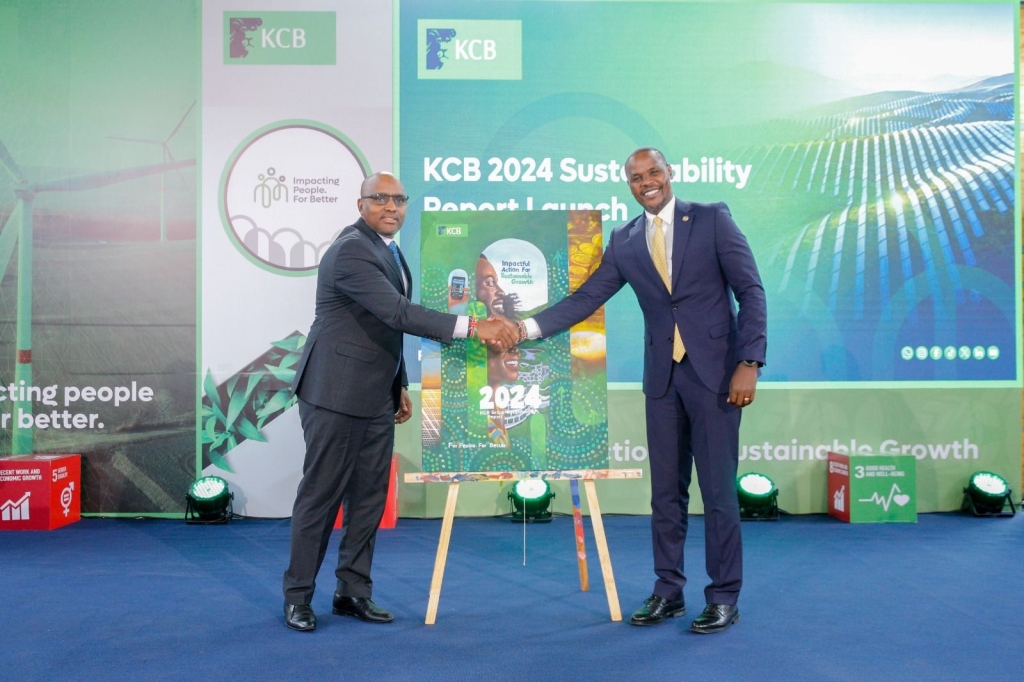
Principal Secretary for Environment and Climate Change Dr. Eng. Festus Ng’eno congratulated the bank on the improvement, stating that finance plays a key role in championing sustainable livelihoods.
“When well guided, finance can help farmers adopt climate-smart agriculture, empower SMEs, support women and youth to achieve their potential, and catalyse innovation in green energy,” He stated.
To enhance credibility, the 2024 KCB Sustainability Report underwent independent assurance by Deloitte for the second year running making it the only verified sustainability report by a Kenyan financial institution.
It also aligns with the IFRS S1 and S2 standards, ahead of the 2027 mandatory deadline by the International Sustainability Standards Board (ISSB).
Beyond its own operations, KCB is now assessing financed emissions in key sectors motor vehicle, commercial real estate, and business loans to guide clients in implementing emission-reduction strategies.
Kenya Bankers Association CEO, Raimond Molenje, commended KCB for leading by example in sustainability reporting.
“When institutions publicly share their progress, their gaps, and their commitments, they raise the bar for the entire sector. Transparency drives trust, and trust drives transformation,” he said.
Through its KCB Foundation’s 2Jiajiri programme, the bank disbursed KShs. 2.58 billion to 4,000 youth-owned MSMEs, 38% of which were women-led.
In addition, 9,699 youth were trained in business, catalysing over 37,000 businesses and creating over 60,000 jobs.
Under its Mifugo ni Mali initiative, KCB also raised livestock and blue economy productivity in Kenya’s drylands, reaching over 1,100 poultry farmers and 913 blue economy businesspeople with market and extension linkages.
Through these accomplishments, KCB continues to lead the way in which the banking sector can be an agent of climate resilience, social inclusion, and sustainable long-term development.







[…] Read Also: KCB Group Strengthens Sustainability Drive with KShs. 578.3 Billion in Screened Loans and KShs. 53.2… […]