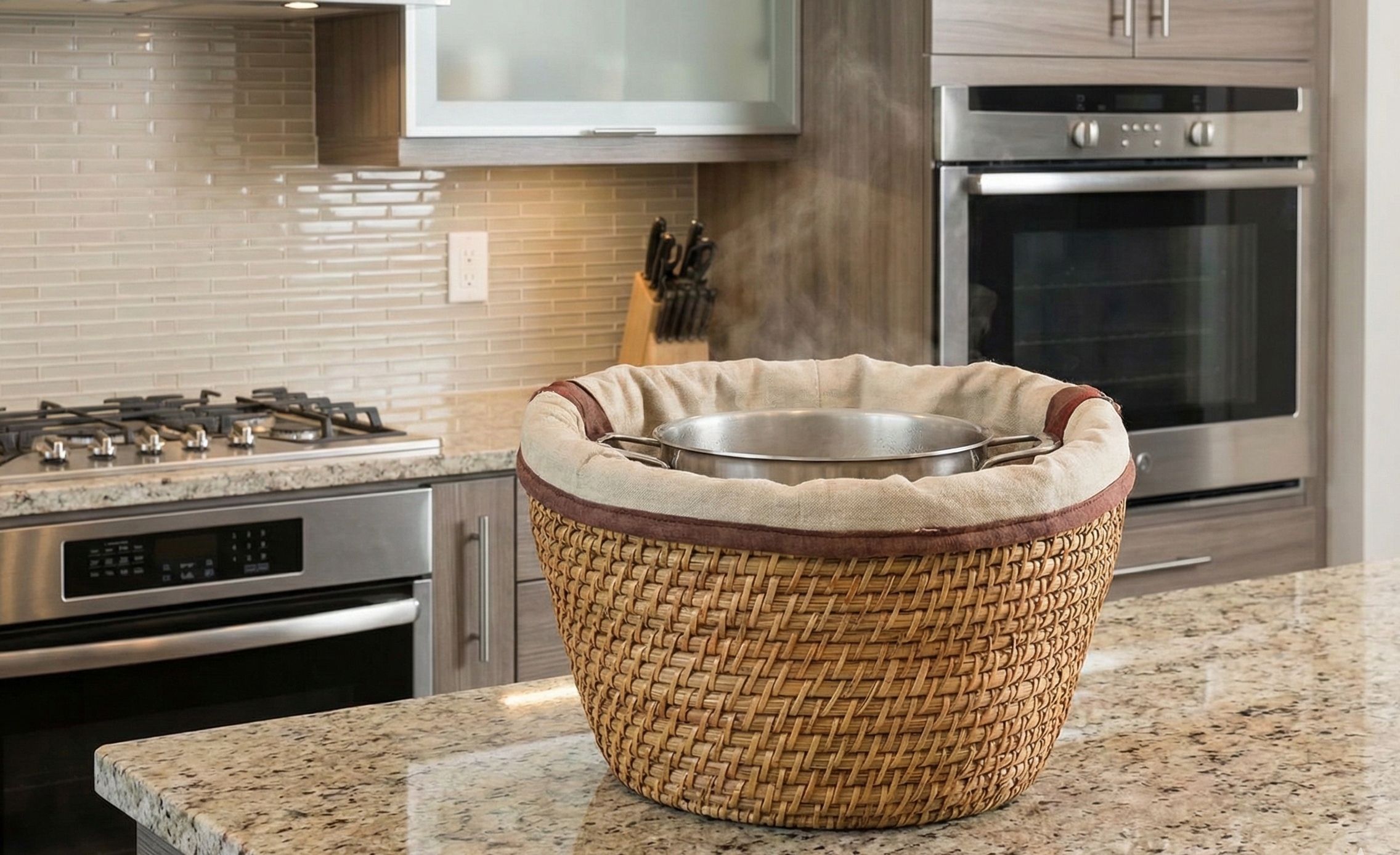
In many Kenyan households, the cost of fuel—whether charcoal, gas, or kerosene—takes up a huge chunk of the monthly budget. Enter the Fireless Cooker (often called a “basket cooker” or “retained heat cooker”).
A Fireless Cooker is a simple insulated container that keeps food hot and allows it to continue cooking after it has been removed from the fire. It works on the principle of heat retention, saving you up to 50% of your fuel costs.
This guide will show you how to build a highly effective Fireless Cooker using locally available materials.
Materials You Will Need
You don’t need expensive equipment. Most of these items can be found around the house or bought cheaply at a local market.
- A Container: A strong basket (kiondo), a plastic bucket, or a sturdy cardboard box.
- Lining Material: Strong fabric (cotton, denim, or old bedsheets). You need enough to line the inside of the Fireless Cooker and make a top cushion.
- Insulation Material: This is the most important part. You can use:
- Old clothes or sweaters (cut into pieces).
- Cotton wool or kapok.
- Wood shavings or sawdust (ensure they are dry).
- Dry grass or hay.
- Thread and Needle: For sewing the fabric lining.
- A Cooking Pot (Sufuria): Use the specific pot you intend to cook with to measure the size of the “nest.”
Step-by-Step Instructions
Step 1: Prepare the Container
Clean your basket or bucket. If you are using a cardboard box, ensure it is sturdy and won’t collapse under the weight of a heavy pot.
Step 2: Create the Bottom Insulation
- Cut a piece of fabric to line the bottom of the basket.
- Place a thick layer (at least 2-3 inches) of your chosen insulation material (e.g., wood shavings or old clothes) at the bottom of the container.
- Compact it firmly. The insulation needs to be dense to trap heat effectively.
Step 3: Create the “Nest”
- Place your cooking pot (sufuria) in the center of the basket on top of the bottom insulation layer.
- Pack more insulation material tightly around the sides of the pot until you reach the top of the basket.
- Crucial: Ensure the insulation is packed tight. If it is loose, heat will escape from your Fireless Cooker. The goal is to create a snug hole or “nest” that fits your pot perfectly.
Step 4: Sew the Lining
- Remove the pot carefully so the insulation stays in place.
- Cover the insulation with your fabric lining.
- Sew the fabric to the rim of the basket or glue it down if using a bucket.
- Stitch through the lining into the insulation in a few places (like a mattress) to prevent the insulation from shifting over time.
Step 5: Make the Top Cushion
Heat rises, so the top cover is vital for a functional Fireless Cooker.
- Cut two pieces of fabric slightly larger than the diameter of your basket.
- Sew them together to make a round pillowcase/cushion cover.
- Stuff it tightly with your insulation material.
- Seal it shut. This cushion should be thick enough to fill the remaining space at the top of the basket and press down on the pot lid.
How to Use Your Fireless Cooker
- Boil Your Food: Place your food (beans, githeri, rice, or meat stew) on your normal stove (gas/charcoal).
- Simmer: Let it boil for a specific time:
- Rice/Potatoes: Boil for 3-5 minutes.
- Beans/Githeri/Meat: Boil for 20-30 minutes.
- Transfer: Quickly remove the pot from the fire and immediately place it into the “nest” in your Fireless Cooker.
- Cover: Place the insulated cushion on top and close the basket lid (if it has one) or cover with a heavy blanket.
- Wait: Leave the food to cook by itself.
- Rice: Ready in ~45 mins to 1 hour.
- Beans/Githeri: Ready in ~3 to 4 hours.
Benefits of Using a Fireless Cooker
- Saves Money: You use significantly less gas or charcoal, which is crucial as fuel prices fluctuate.
- Saves Water: Because the pot is sealed, very little steam escapes, so you don’t need to keep adding water.
- Convenience: You can leave the house while the food cooks without worrying about burning the house down.
- Food Quality: Food cooked slowly retains more nutrients and flavor.
Making a Fireless Cooker is a fun weekend project that pays for itself in just a few weeks. It is an environmentally friendly way to cook that reduces deforestation and keeps your kitchen cooler.
For more technical details on energy-saving cooking, you can check resources like Practical Action or the Clean Cooking Alliance.