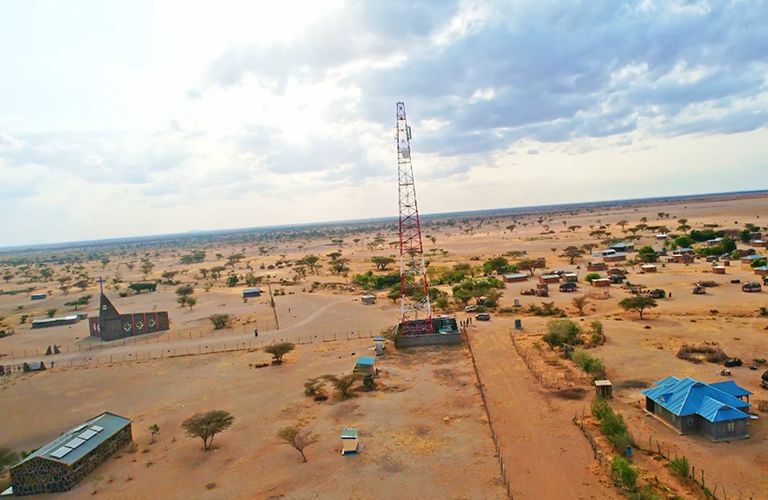
Access to network in Nothern Kenya is no longer a luxury it has become a lifeline that is reshaping daily life, improving security, and unlocking new opportunities for families across the region. For decades, Northern communities lived in total communication darkness, but thanks to rollout of Universal Service Fund (USF) which has finally begun to close the gap.
How Access to Network in Northern Kenya Is Driving Change
For many residents, access to network in Northern Kenya has brought a new sense of safety. Locals say that before USF towers were deployed, emergency coordination was nearly impossible.
“Before the network came, security was a big challenge, incase of attack or security issue, you couldn’t call for help,” said a resident.
“Now, with access to network in Northern Kenya, we report incidents quickly, and chiefs respond faster.”
The government, through the Communications Authority of Kenya, launched the USF in 2013 to connect unserved and underserved areas. Twenty new sites have now gone live in parts of Marsabit, Turkana, Samburu, and Baringo regions previously “completely in darkness.”
According to residents, the demand for communication came even before roads, clinics, or markets.
Safaricom’s Radio Access Planner, Eng. Joseph Kihurani, described the rollout as both challenging and rewarding.
“Some of these sublocations are four times the size of Nairobi County,” he said. “Access to network in Northern Kenya means climbing hills, sleeping in tough terrain, and installing infrastructure where none existed. But once people connect, everything changes. When leaders ask them what development they needed first, they said before roads, they should bring them network.”
“Access to network in Northern Kenya is the first step to every other development.”
The transformation is visible almost immediately. Small trading centres emerge, M-PESA agents set up, and schools begin using the internet.
“Once we put up a site, we see shops coming up, teachers downloading materials, and even local security teams coordinating better,” added Kihurani.
For the Communications Authority, the USF is fulfilling exactly what it was created for.
“With USF, access to network in Northern Kenya has become possible in places that never had communication,” said Julius Lenaseiyan from the Central and Eastern Regional Office.
“People can now make calls, use M-PESA, and reach their families.”
Phase I and II of the USF project are complete, and phases III and IV are underway promising even wider access and strengthened security across the North.
For communities long isolated by distance and danger, access to network in Northern Kenya is more than a connection; it is hope, safety, and a doorway to a new future.