In the landscape of East Africa’s largest economy, wealth is often synonymous with long-standing industrial dynasties, political legacy, and diversified conglomerates.
While the exact net worth of Kenya’s elite remains a subject of intense speculation due to the private nature of many holdings, certain families consistently stand out for their multi-billion shilling interests in banking, agriculture, manufacturing, and real estate.
Here are the 10 richest families currently wielding significant economic influence.
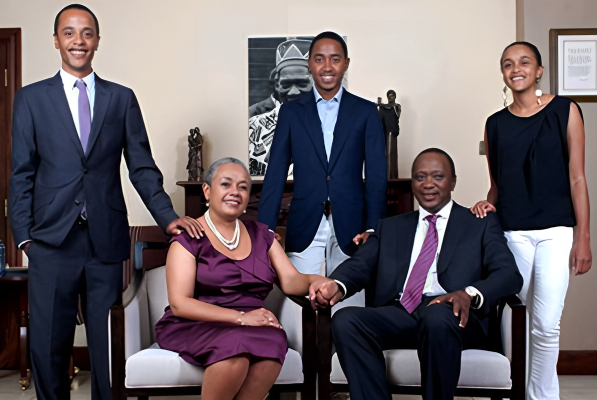
1. The Kenyatta Family
Estimated Net Worth: $1.2 Billion – $2.0 Billion (Ksh 150B – Ksh 260B+)
The story of the Kenyatta wealth began with the late Mzee Jomo Kenyatta, Kenya’s founding father. During the post-independence era, the family strategically acquired vast tracts of land—estimated at over 500,000 acres—which formed the bedrock of their empire.
Under the leadership of Mama Ngina Kenyatta and later former President Uhuru Kenyatta, the family transitioned from land-rich to a highly diversified corporate powerhouse.
Today, the family’s crown jewel is the NCBA Group, where they hold a controlling 13.2% stake. They also dominate the regional dairy market through Brookside Dairy, which has expanded into Ethiopia and Uganda.
Their latest mega-project is Northlands City, a private urban development in Ruiru valued at over Ksh 100 billion, designed to house 250,000 people and a massive industrial park.
Despite the family stepping back from active politics after 2022, their economic footprint remains unparalleled.
They maintain significant interests in the Heritage Hotels group and the Mediamax Network. Their wealth is increasingly tied to the digital economy, as NCBA’s M-Shwari platform processes billions of shillings in micro-loans across East Africa annually.
2. The Moi Family
Estimated Net Worth: $1.0 Billion – $3.0 Billion (Ksh 130B – Ksh 390B)
The wealth of the late Daniel arap Moi was built over a 24-year presidency where he established interests in nearly every sector, from aviation to telecommunications.
Moi encouraged his sons—most notably Gideon Moi, Philip, and the late Jonathan—to take active roles in the corporate world. The empire was constructed through a mix of strategic state-private partnerships and large-scale agricultural acquisitions.
Following the former President’s passing, the family has been in the process of distributing an estate that court documents suggest includes massive stakes in The Standard Group and the logistics giant Siginon Group.
They also hold thousands of acres of tea and flower farms under Sian Roses, exporting millions of stems to Europe. While they recently exited the banking sector by selling Trans-National Bank to Access Bank, they reinvested heavily in the energy sector.
Currently, the family is a major player in Kenya’s green energy transition. They acquired a significant stake in Sosian Energy, a geothermal power producer.
Despite political shifts, the Moi family remains a formidable economic force, with their wealth managed through various holding companies and trusts that ensure the legacy of Kenya’s second president continues to shape the Nairobi Securities Exchange.
3. Narendra Raval & Family (Devki Group)
Estimated Net Worth: $600 Million – $800 Million (Ksh 78B – Ksh 104B)
Known popularly as “Guru,” Narendra Raval arrived in Kenya from India as a teenage assistant priest with almost nothing. His rise is a classic “rags-to-riches” story; after leaving the priesthood to marry, he started a small hardware shop in Gikomba market with his wife.
He transitioned from trading building materials to manufacturing them, identifying a massive gap in Kenya’s infrastructure supply chain.
Today, Raval’s Devki Group is the largest manufacturer of steel and cement in East Africa. His companies, including National Cement (Simba Cement) and Devki Steel Mills, have successfully challenged traditional multinational dominance by offering lower prices and massive local production.
He recently expanded into Rwanda and Uganda, solidifying his position as the region’s industrial kingpin.
Raval is unique among Kenya’s wealthy for his frugality and public philanthropy, having pledged to leave 50% of his wealth to charity.
His empire continues to grow, with his recent acquisition of the assets of ARM Cement and the launch of a Ksh 50 billion mega-steel plant in Tororo, which is expected to make East Africa self-sufficient in steel production.
4. Manu Chandaria & Family
Estimated Net Worth: $1.5 Billion – $2.5 Billion (Ksh 195B – Ksh 325B)
The Chandaria wealth began when Manu’s father arrived in Kenya in 1915 and opened a small provision store. After returning from the US with engineering degrees, Manu Chandaria transformed the family’s small aluminum business into the Comcraft Group.
By the 1960s, he had expanded the business into a multinational conglomerate by establishing manufacturing plants across Africa, Asia, and Europe.
Comcraft is now a global multi-billion dollar enterprise specializing in steel, aluminum, and plastics. In Kenya, they are best known for Mabati Rolling Mills (MRM), the country’s leading provider of roofing solutions.
The family has managed to stay at the top for over 60 years by maintaining a professionalized management structure and avoiding the “generational wealth curse” that often hits family businesses.
Now in his 90s, Manu Chandaria has largely shifted his focus to the Chandaria Foundation, one of the most active philanthropic organizations in Africa.
However, the family’s business remains a cornerstone of the regional economy, with interests in hundreds of companies and property holdings that span from Nairobi to London.
5. Bhimji Depar Shah & Family
Estimated Net Worth: $700 Million – $1.0 Billion (Ksh 91B – Ksh 130B)
The Shah family’s journey began in 1970 when Bhimji Depar Shah started a garment manufacturing business. Seeing a bigger opportunity in consumer goods, he pivoted to soap and edible oil production in the 1980s.
Alongside his sons Vimal Shah and Tarun, they built Bidco Africa into a household name, competing against global giants like Unilever.
Bidco is now the largest manufacturer of edible oils and fats in East and Central Africa, producing brands like Kimbo, Golden Fry, and White Star.
They have expanded into the food and beverage sector with products like Jooz and Sunsip. The family’s success is attributed to their “soil-to-pan” strategy, where they partner with thousands of local smallholder farmers to source sunflower and soya seeds.
The family recently completed the Bidco Industrial Park in Kiambu, a Ksh 20 billion facility that serves as their regional hub. Vimal Shah continues to be an influential voice in Kenyan industry, advocating for manufacturing-led growth.
Their wealth remains tied to the everyday consumption of millions of people across the continent.
6. The Philip Ndegwa Family
Estimated Net Worth: $1.2 Billion – $1.6 Billion (Ksh 150B – Ksh 200B)
The Ndegwas are often cited as the epitome of “old money” and professional wealth in Kenya. Philip Ndegwa, a former Governor of the Central Bank and a highly respected economist, laid the foundation in the 1970s.
He used his deep understanding of finance to establish First Chartered Securities, a vehicle that allowed the family to acquire stakes in blue-chip companies during their early stages of growth.
The family’s most visible asset today is their significant shareholding in NCBA Group, which resulted from the merger of NIC Bank (where they were majority owners) and CBA. They also own ICEA Lion Group, one of the largest insurance and asset management firms in East Africa.
Their portfolio is managed with high-level corporate governance, making them one of the most stable wealthy families in the country.
Beyond finance, the Ndegwa family holds massive interests in high-end real estate and agriculture through AMW (Africa Motors and Cycles) and various tea estates.
Their sons, James and Andrew Ndegwa, now lead the empire, focusing on expanding their financial services footprint into the wider West African market.
7. The Rai Family
Estimated Net Worth: $600 Million – $900 Million (Ksh 78B – Ksh 117B)
The Rai family, led by Jaswant Rai, built their fortune initially in the timber industry in the 1960s. Starting in DR Congo and later moving to Kenya, they established RaiPly, which became the dominant player in the wood and furniture industry.
From timber, they aggressively expanded into the agricultural sector, specifically sugar, where they have become the most powerful private millers in Kenya.
Today, the family controls a massive chunk of Kenya’s sugar market through West Kenya Sugar, Sukari Industries, and Olepito Sugar.
They recently launched the Naitiri Sugar plant, a Ksh 5 billion investment. Their dominance has made them both highly successful and sometimes controversial, as they often find themselves at the center of the country’s turbulent sugar politics.
Aside from sugar and timber, the Rai family owns Menengai Oil Refineries, which produces edible oils and detergents, competing directly with Bidco.
They also have interests in the cement industry through Rai Cement. Their wealth is built on controlling essential commodities, ensuring a steady stream of revenue regardless of economic cycles.
8. Naushad Merali Family
Estimated Net Worth: $600 Million – $800 Million (Ksh 78B – Ksh 104B)
The late Naushad Merali was known as Kenya’s greatest dealmaker. He built the Sameer Group by acquiring the local subsidiaries of multi-national companies like Firestone, Ryce Motors, and Prudential.
His most legendary move was buying a 60% stake in Vivendi’s Kenyan telecom unit for $230 million and selling it an hour later to Celtel for $250 million—making a $20 million profit in a single afternoon.
Following Merali’s passing in 2021, the empire is managed by his son, Sameer Merali. The family has pivoted the Sameer Group away from manufacturing (closing the Firestone tire factory) and toward high-yield real estate and logistics.
They own the Sameer Business Park and have massive interests in the financial sector and large-scale coffee and tea farming.
Today, the Merali family remains one of the wealthiest in East Africa, with their fortune distributed across telecommunications, finance, and agriculture.
They continue to hold significant shares in various listed companies on the Nairobi Securities Exchange, maintaining the sophisticated investment legacy of their patriarch.
9. The Late Nicholas Biwott Family
Estimated Net Worth: $500 Million – $1.0 Billion (Ksh 65B – Ksh 130B)
Nicholas Biwott, known as the “Total Man,” was a powerful figure in the Moi administration who used his political position to build an incredibly secretive but massive business empire. His wealth was largely focused on energy, construction, and high-value real estate.
He was a master of corporate structuring, often holding assets through offshore entities and complex trusts to keep the true scale of his wealth hidden.
The family’s primary visible asset is the Yaya Centre, one of Nairobi’s premier shopping malls and apartment complexes.
They also owned KenolKobil, one of the region’s largest oil marketers, before selling it to the French firm Rubis for a multi-billion shilling sum. The family’s construction arm, HZ & Company, was responsible for some of the largest infrastructure projects in Kenya during the 1980s and 90s.
Today, the Biwott estate is managed by his heirs, who have focused on consolidating his various holdings. While the political influence has waned since Biwott’s death in 2017, the sheer value of their commercial real estate and liquidated energy assets keeps them comfortably within the top tier of Kenya’s wealthy elite.
10. S.K. Macharia & Family
Estimated Net Worth: $150 Million – $300 Million (Ksh 20B – Ksh 40B)
Samuel Kamau (S.K.) Macharia started his business journey as a senior finance manager in the government before venturing into the paper industry with Madhupaper.
His business career was marked by intense battles with the state, which eventually led him to create Royal Media Services (RMS). He correctly bet on the liberalization of the airwaves, launching Citizen TV and Radio Citizen.
RMS is now the largest private media house in Kenya, dominating the market with over 14 radio stations and the country’s most-watched television station.
Macharia’s wealth grew as he leveraged his media dominance to secure advertising revenue that previously went to the state-run KBC. He has also diversified into the insurance sector with Directline Assurance, the leading provider of PSV insurance in Kenya.
In recent years, the family has expanded into the agriculture and real estate sectors. Despite frequent legal battles over his business interests, S.K. Macharia remains a pivotal figure in both the business and political realms, using his media empire to influence national discourse while maintaining a massive private fortune.
Analysis
The landscape of Kenyan wealth is changing. While the “old money” families (Kenyatta, Moi, Ndegwa) continue to dominate through banking and land, a new class of “industrialists” (Raval, Rai, Shah) is rising by controlling the means of production.
Furthermore, the next decade is likely to see “tech wealth” enter this list, as founders of fintech and logistics platforms begin to rival the valuations of traditional manufacturing empires.
For more business insights and analysis on the Kenyan economy, stay tuned to Business Voice Kenya