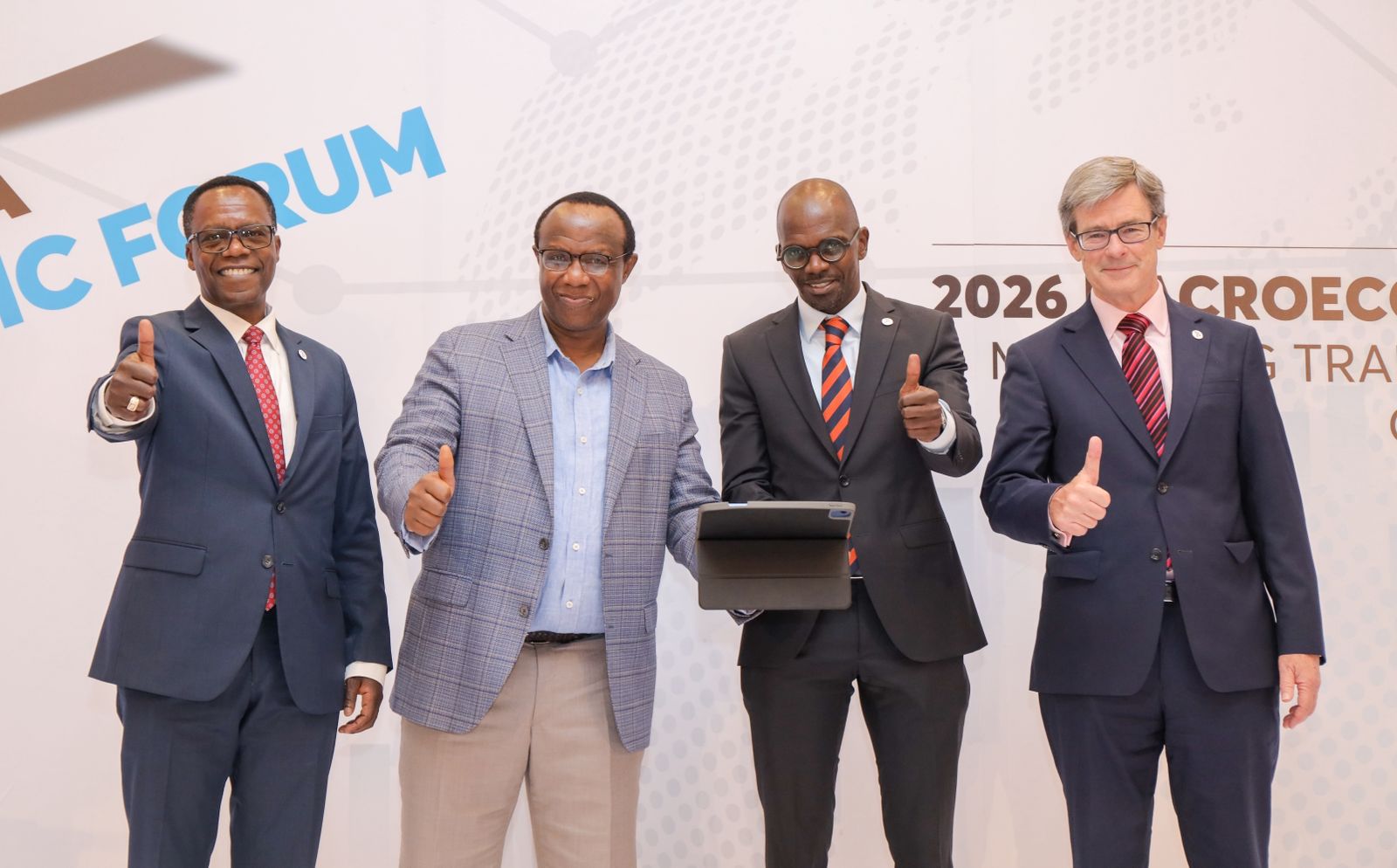
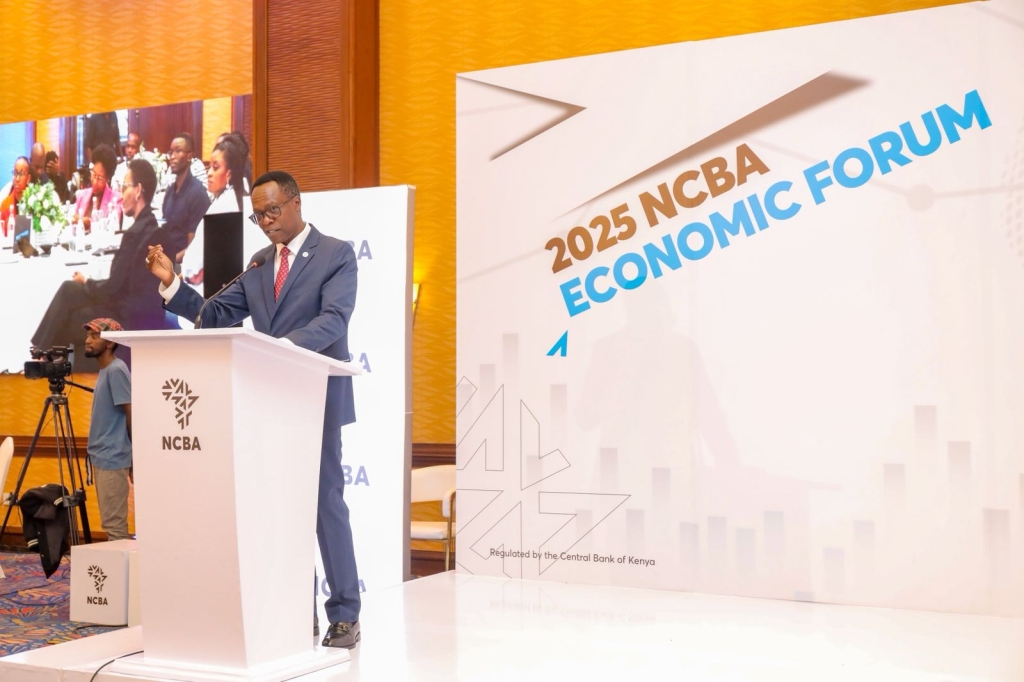
At the NCBA Economic Forum in Nairobi, optimism mixed with realism as business leaders and economists reviewed Kenya’s economic growth prospects for the year 2025.
The mood was hopeful but firmly grounded in the realities facing ordinary Kenyans.
For the Managing Director of NCBA Group, John Gachora, the numbers speak to a story of resilience but also a reminder that macroeconomic success has to eventually touch the lives of ordinary citizens.
“We think that the economy will grow by 5 percent this year,” said Gachora during the forum at the Nairobi Serena Hotel. “That’s an upward revision from our earlier projection of 4.8 percent. We’re also optimistic that in 2026, growth will be around 5.1 percent. But the real question is, how do we translate that growth to the dinner table?”
It was a question that lingered throughout the discussions, which drew policymakers, economists, and members of the Presidential Economic Council including its chair, Dr. David Ndii.
The event which is part of NCBA’s ongoing thought-leadership series, has become a trusted platform for candid conversations on Kenya’s economic direction.
Gachora reflected on the journey so far noting that past engagements at the forum had brought critical clarity on government policy, from assurances against debt default to the explanation of the G2G fuel import program and currency stabilization efforts.
“This forum has always been about transparency and evidence-based dialogue,” said Gachora. “We have seen major macroeconomic issues being addressed: debt pressures easing, inflation contained, the shilling stabilizing, and interest rates coming down. The next challenge is translating these gains to Main Street to the households and small businesses that form the backbone of the economy.”
To help track this transition, Gachora said NCBA will launch a new Consumer Spending Index in January 2026 that will monitor household spending patterns, offering a clearer picture of Kenya’s microeconomic wellbeing, or in his words, “the real economy of the dinner table.”
Beyond data, Gachora spoke passionately about supporting small and medium-sized enterprises, referred to as “the heartbeat of Kenya’s growth story.”
“We made a commitment as the banking sector to grow credit to SMEs by Ksh.150 billion last year, and we came close to that target,” he said. “Now, with interest rates easing and private credit demand picking up, we want to do even more. Access to credit remains the most important thing for SMEs.”
He noted that NCBA was expanding its support for entrepreneurs through asset finance, leasing programs, and green mobility initiatives, while working with the government on a credit guarantee scheme to make financing more accessible.
The forum also discussed wider policy issues, such as the National Infrastructure Fund and fiscal accountability. Dr. Ndii, while responding to concerns by the public, assured attendees that the NIF would be financed through privatization proceeds, not new taxes.
“It is a mechanism to fund infrastructure outside the budget,” he said, adding that the government was committed to fiscal discipline and transparency.
By the end of the discussions, what Gachora made clear was that, though Kenya’s economy was stabilizing, for sustainable economic growth, that stability needed to translate into real opportunities and relief for families and small businesses.
“The big picture looks good,” he said, “but we must now focus on how those numbers improve lives how economic growth feels at the dinner table.” With the NCBA forecasting a 5 percent growth rate in 2025 and 5.1 percent in 2026, such a focus by the bank on practical, people-centered growth harks to a shift toward sustainability, inclusion, and everyday impact: an economy serving all Kenyans.
Read Also: ConnectPlus: NCBA’s Bold Move to Lead East Africa’s Fintech Transformation