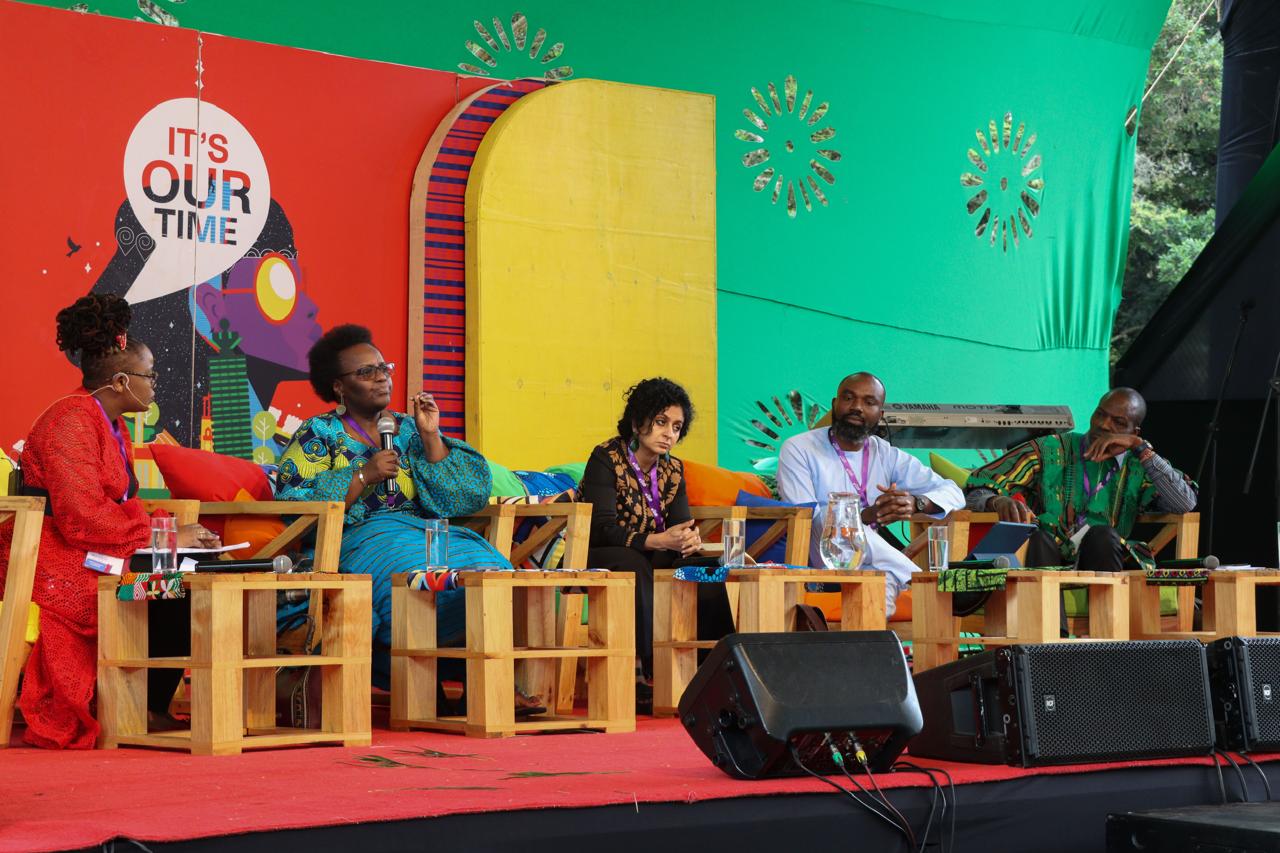
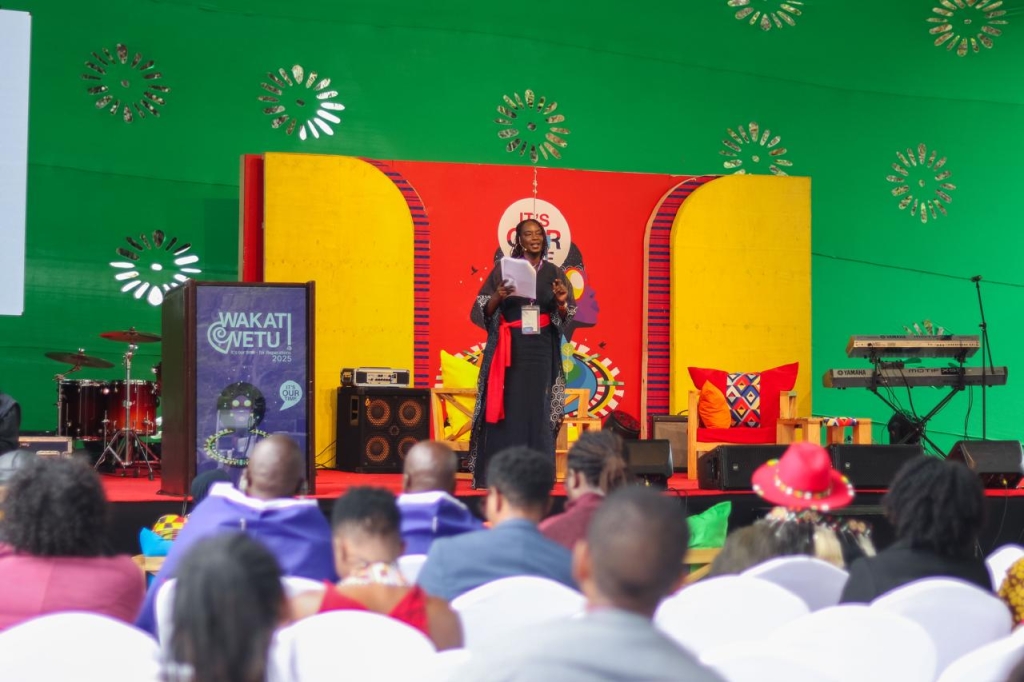
The serene gardens of Entim Sidai Wellness Sanctuary came alive on Wednesday as the Africa Reparations Festival themed “Wakati Wetu: It’s Our Time to Resist, Repair, and Reclaim” opened in Nairobi.
The two-day festival marks Africa’s first continental gathering dedicated to reparatory justice, blending art, activism, and scholarship in a shared call for healing and renewal.
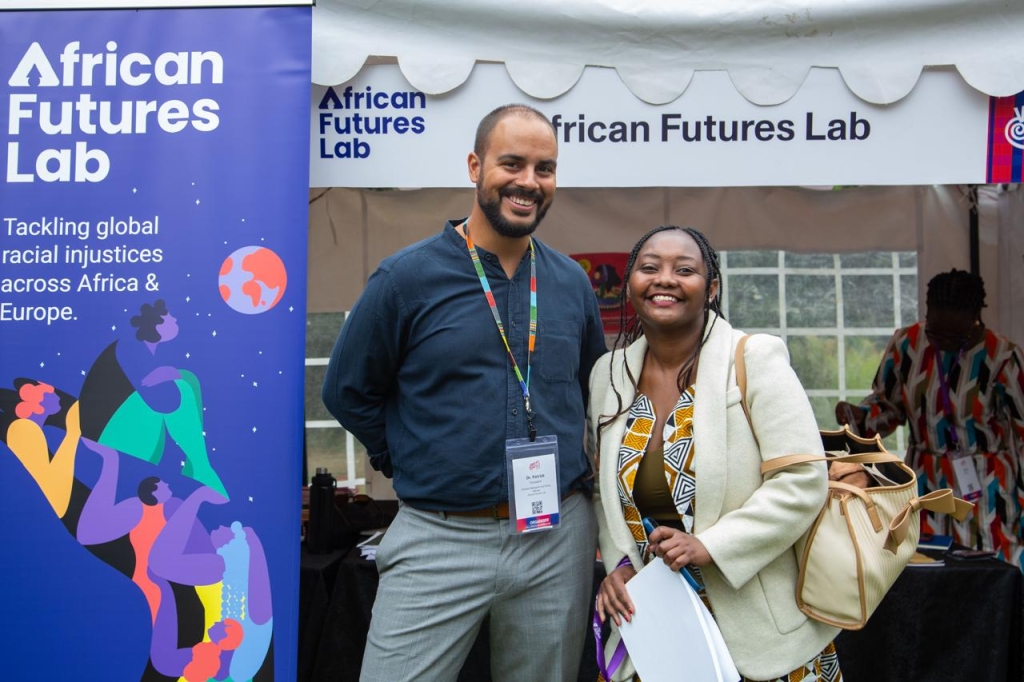
The event, organized by African Futures Lab, Baraza Media Lab, AU ECOSOCC, and Reform Initiatives, brings together hundreds of artists, thinkers, policymakers, and Pan-Africanists from across the continent.
With support from the African Union, the festival seeks to reflect on the deep scars of colonialism and chart new pathways toward repair and collective growth.
A Call for Reflection and Renewal
Celebrated author Yvonne Adhiambo Owuor opened the festival with a moving keynote that called for truth and courage in confronting history’s wounds.
“Reparations is first an act of moral autopsy and then moral exorcism,” she said. “There is no healing without walking into the wound and naming it in full.”
Her words resonated deeply, as she warned against turning reparations into another “sanitized development agenda” that ignores justice.
“Repair begins with truth,” she added. “To strip away illusions so that what is being healed is the wound itself.”
Similarly, Dr. Kathryn Nwajiaku-Dahou of the Politics and Governance Programme invoked a proverb from her father, reminding participants of the inevitability of justice:
“The cup that was meant for your lips will never pass you by.”
Justice Through Memory and Truth
Veteran lawyer and former MP Paul Muite, who played a key role in the Mau Mau reparations case, urged Africans to pursue justice through accurate historical record-keeping.
“For reparations to succeed, we must start with research knowing who did what, when, and where,” he said. “Justice begins with truth.”
He reflected on the painful irony of Kenya’s history:
“The Mau Mau war broke out because the people’s call for land justice was ignored. Britain responded with torture and killings and even after independence, many of those who took power didn’t want to hear about the freedom fighters.”
His remarks drew solemn nods from the audience, grounding the day’s conversations in historical accountability.
Media and Memory in the Fight for Justice
In a session titled “Ubuntu: Media and Memory,” journalist Ngartia Mūrūthi highlighted how colonial-era newspapers shaped public perception and erased African voices.
“For colonialism to succeed, it had to manufacture consent,” he explained. “The media became a tool to promote the myth of an ‘empty land’ waiting for settlers.”
Media scholar Christine Mungai added that today’s journalists must continue the work of repair through brave storytelling:
“It takes courage to tell uncomfortable truths. That courage is part of reparations.”
Art as a Tool for Healing
The festival also celebrated art as a form of resistance and renewal. Under the theme “Confronting the Silence,”musicians, poets, and filmmakers used creative expression to reclaim African stories.
Kenyan artist Eric Wainaina led the opening night concert, joined by DJ Talie, Koko Koseso, and NiK DJ. Meanwhile, films like “If Objects Could Speak” and “How to Build a Library” explored how stolen African artifacts and suppressed memories still shape identity.
Festival convener Liliane Umubyeyi, Executive Director of African Futures Lab, reminded participants that the event was not just about reflection but rebirth:
“Justice is both a political and cultural act. Through our art and storytelling, we reclaim our power and our place in history. Truly, ni wakati wetu it’s our time.”
Looking Ahead: Defining Africa’s Future
The Africa Reparations Festival continues through Thursday, October 23, featuring discussions on Tax Justice, Climate Reparations, and Gendered Reparations, and will close with a concert led by Sitawa Namwalie and June Gachui.
As the African Union prepares to usher in the Decade of Reparations (2026–2036), the Nairobi gathering signals a new chapter one where Africa does not plead for justice but defines it on its own terms.