A new report by Zindi has revealed how young people in Kenya are using artificial intelligence (AI) and data science skills to improve their employment prospects.
The findings were unveiled during the 80th session of the United Nations General Assembly.
The Zindi Employability Report for Kenya 2025, produced in partnership with Dalberg Data Insights and the International Centre for AI Research Ethics (ICAIRE), is the first comprehensive study of its kind.
It examined the employment outcomes of thousands of Kenyans who engage with Zindi, Africa’s leading platform for AI challenges and skills development.
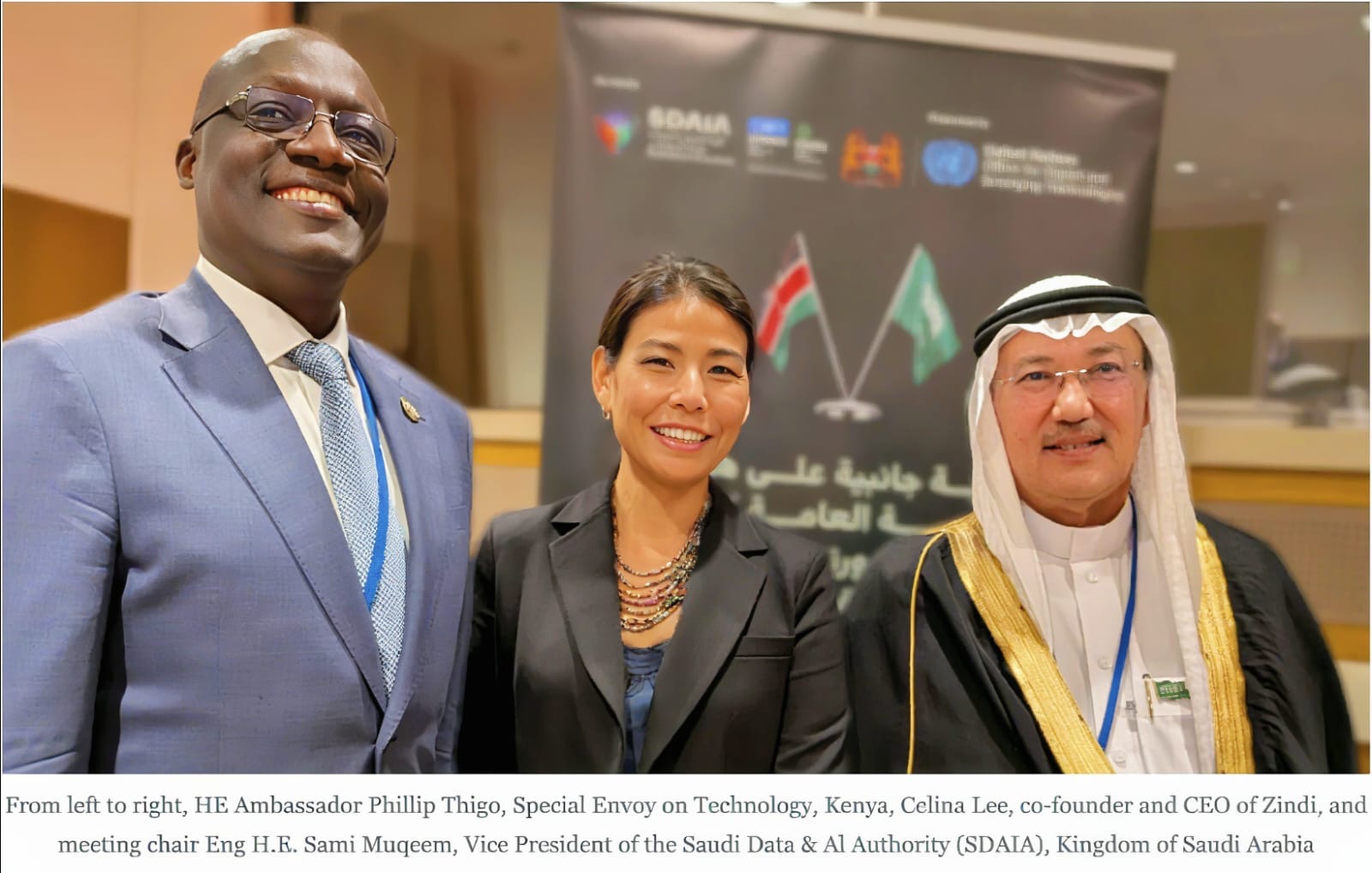
The launch was attended by Zindi CEO and Co-founder Celina Lee, Eng. H.E. Sami Muqeeb, Vice President of the Saudi Data & AI Authority (SDAIA), and Kenya’s Ambassador Philip Thigo.
The event underscored the role of platforms like Zindi in addressing the pressing issue of youth unemployment in Kenya.
With half of the world’s new labor force expected to come from sub-Saharan Africa by 2030, and many Kenyan graduates facing long waits for formal employment, the ability to translate AI knowledge into real jobs is becoming essential.
The report shows that active Zindi users are seeing life-changing career outcomes, creating a new pathway into the digital economy.
How Zindi Creates Opportunities for Youth
The study analyzed data from over 8,000 Kenyan users. It found that nearly 20% had changed careers within three years of joining the platform. Success was strongly linked to more than just winning competitions.
Users who completed full profiles, participated in at least four challenges, and engaged with teams or discussions were far more likely to secure employment.
For instance, users with complete profiles recorded an 81% career advancement rate, compared to only 3% for those without.
Those who participated in four or more challenges were four times more likely to be hired, while team collaborations tripled hiring potential.
These results highlight the importance of combining technical skills with communication and teamwork qualities employers consistently seek.
Kenya’s Special Envoy on Technology, Ambassador Thigo, emphasized this point: “Africa enters the Age of Intelligence with one leg up; people. Talent is still the critical base of the AI stack with no AVs, data ferments, compute festers and use cases are irrelevant.”
Implications for Employers
Businesses are reminded to rethink traditional hiring methods by the revelation. The Zindi community offers a diverse pool of employment-ready AI experts with experience that lies outside titles and leaderboards.
By looking at those who continue to participate, collaborate, and solve problems consistently, companies can get access to applicants with practical, tested experience.
Organizations that tap into this network are more likely to gain employees who are adaptive, creative, and prepared for a data-driven economy.
Through Zindi’s recruitment solutions, businesses can connect directly with this talent pool, developed in an environment focused on learning, collaboration, and problem-solving.
The report confirms that Zindi is more than just a learning platform it is also a launchpad for careers.
It exposes young people to AI skills and jobs across Kenya, by all backgrounds and geographies.
It also sends a powerful message to teachers, policymakers, and the public sector regarding the potential of community-based solutions to halt youth unemployment.
As Ambassador Thigo put it: “Africa’s talents are not waiting to be part of the game they are already playing in the AI economy.”
By cultivating this talent through platforms like Zindi, Kenya is not only equipping its growing workforce but also positioning itself as a leader in shaping Africa’s AI future.