Kenya is doubling down on Public-Private Partnerships (PPPs) as one of the key drivers for the execution of transformative infrastructure projects and meeting its long-standing development financing gap.
This was the overriding message at the Kenya PPP Symposium, held on Monday, August 11, 2025, at Nairobi Serena Hotel, where the country’s top government officials, private sector tycoons, and development partners gathered to map the future of Kenya’s PPP agenda.
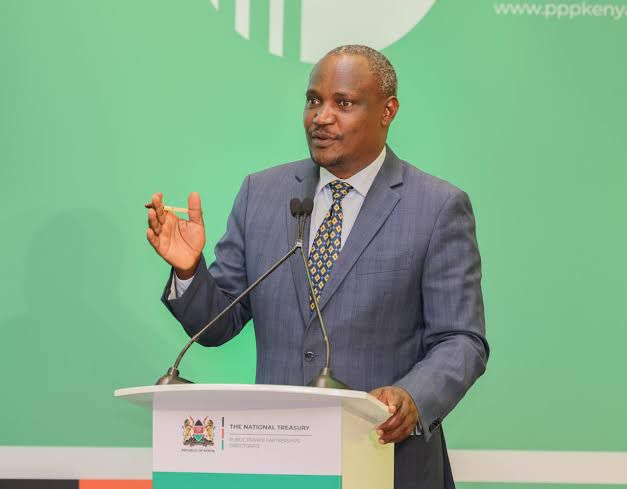
Speaking to the forum, National Treasury Cabinet Secretary, CPA Hon. John Mbadi, observed that PPPs are not just financial tools anymore but “tools of transformation” in a country with increasing infrastructure demands and limited fiscal space
“With Kenya’s borrowing space narrowing, we must adopt innovative, sustainable financing mechanisms to meet these development needs,” said Mbadi. “PPPs offer the private sector an opportunity to diversify its participation in the nation’s development and growth.”
Infrastructure Financing Gap
Kenya requires around Ksh 560 billion annually to upgrade and keep its infrastructure. However, its current outlay is approximately Ksh 224 billion, leaving a gap of Ksh 336 billion per year. The government is seeking to fill the gap through PPPs without raising public debt.
Through partnerships with the private sector, Mbadi noted, Kenya can unlock capital, efficiency, innovation, and improved risk management all while freeing up public resources for social services such as health, education, and water.
Country Ready for PPP Investment
Mbadi reiterated that Kenya is ready to fully embrace PPPs. He pointed to the country’s $124 billion GDP, 3,243MW installed energy capacity (79% of which is renewable), and well-developed infrastructure networks including road, rail, and telecoms.
The country also benefits from political stability, a skilled workforce, and strong domestic capital markets. Pension funds alone hold Ksh 2.25 trillion in assets, while the banking sector commands Ksh 7.7 trillion.
“We are determined to leverage this capital through pooled instruments to tap into the compelling opportunity for sustainable infrastructure financing,” he said.
New Projects Unveiled
In a major announcement, Mbadi unveiled several PPP projects that are being offered to the market on a competitive basis. These include:
- 2,820 affordable housing units cross-subsidized with 200 market-rate units in Athi River
- A 3,000-capacity tuition facility and 800-student hostel at Moi Teaching and Referral Hospital, Eldoret
- 4,000-bed capacity student hostels at the University of Nairobi
- A 2,000-bed capacity hospital at Pwani Teaching and Referral Hospital, Kilifi
“I believe we have the capacity to finance, build, operate, and maintain these projects using local resources,” Mbadi added.
Strengthening the PPP Framework
Principal Secretary, National Treasury, Dr. Chris Kiptoo highlighted the strategic change in how PPPs are being managed. As the Chair of the PPP Committee, he elaborated that the role of the committee has transitioned beyond project approvals to strategic enablement.
Our role is to accelerate high-impact, bankable PPP projects, enhance coordination, reduce bureaucratic queues, and facilitate alignment with national priorities such as Vision 2030 and the Bottom-Up Economic Transformation Agenda,” Kiptoo stated.
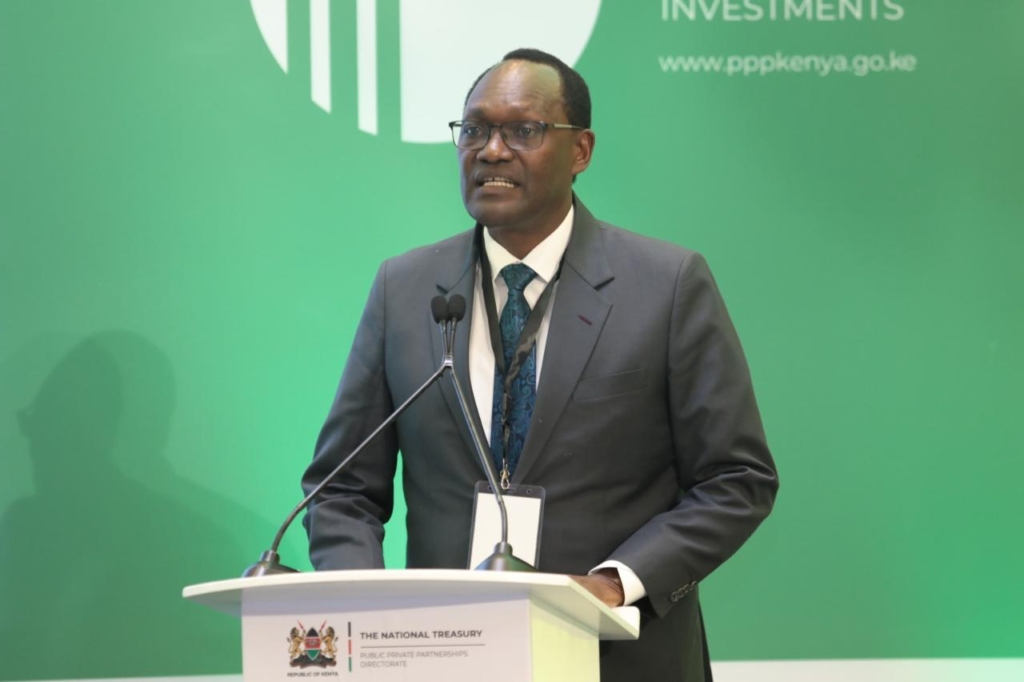
He noted that Kenya has already moved “from policy to implementation,” with successful PPPs in key sectors including energy, transport, housing, water, and health.
Small Projects, Big Impact
Adding to the conversation, PS for Public Investments and Asset Management, Mr. Cyrille Wagunda Odede, called for greater attention to small and micro PPPs, especially at the county level.
“Mega projects often get the spotlight, but small PPPs touch lives more directly and have faster turnaround times,” he said, revealing plans to explore the creation of a dedicated unit focused on small and medium-sized PPPs.
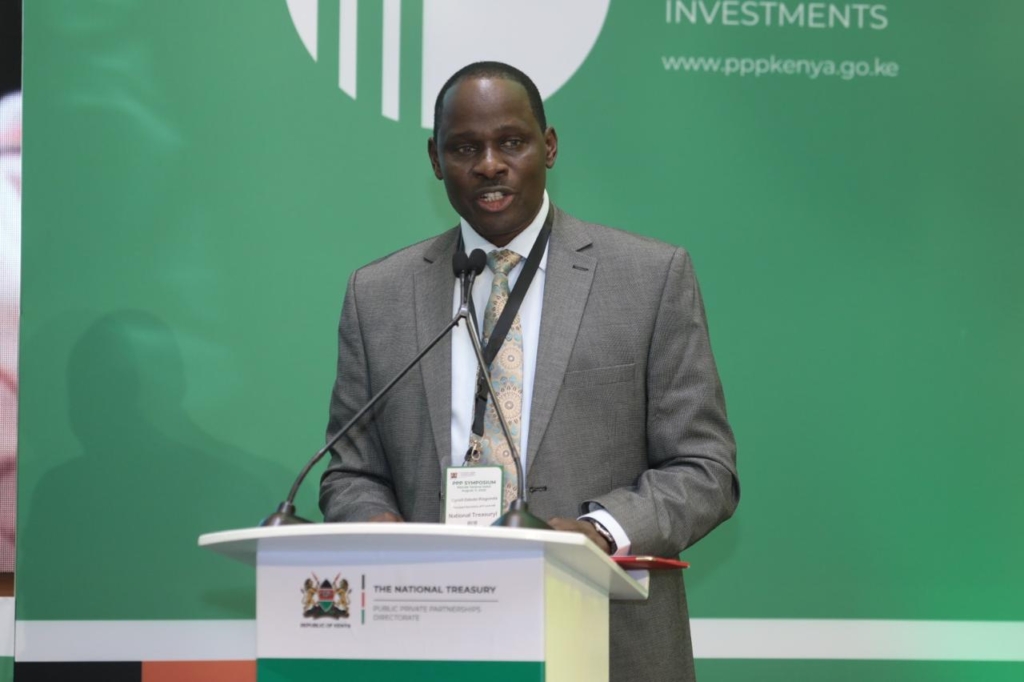
Odede stressed that successful PPPs are rooted in trust and shared responsibility between government and private investors, and that affordability and impact for ordinary citizens Wanjiku must remain central.
A Call To Action
The officials closed by reiterating Kenya’s strong commitment to deepening PPP implementation. While celebrating past achievements, they acknowledged the challenges that remain including delays, capacity gaps, and the need for stronger investor confidence.
“Let this symposium not just be another conference, but a springboard for real partnerships, real investments, and real impact,” said Kiptoo.
CS Mbadi echoed this sentiment:
“To our private sector partners we welcome your ideas and your investment. Kenya is open for business. To the public sector let us focus not only on the process but on the outcomes that matter to our people.”
As Kenya navigates a tightening fiscal environment, the PPP model is emerging not just as an option but as a necessity. This symposium introduced a renewed urgency and collaboration to turn the infrastructure backbone required to drive economic and social growth into a reality.
For further information on the projects going to market, please visit the National Treasury’s PPP Directorate website or get in touch with the PPP Unit.